Crabapple Bonsai: Full Guide, Fruit and Flowering

FLOWERING CRABAPPLE BONSAI

The Crabapple Bonsai: Beauty in All Four Seasons

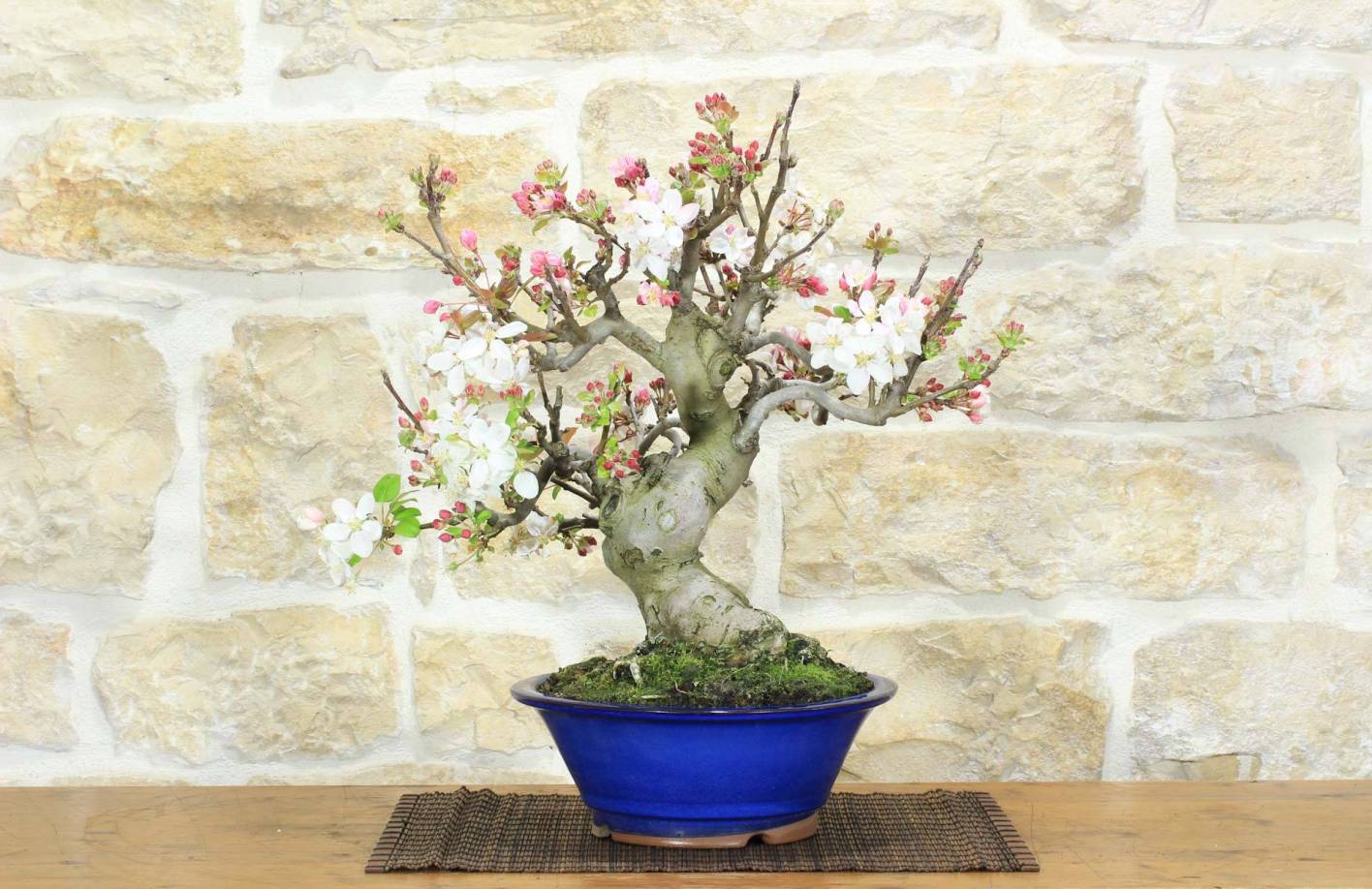
The Flowering Crabapple (genus Malus) is one of the most rewarding bonsai of all. It is a generous tree that puts on a show all year round: in spring it covers itself with white or pink flowers opening from red buds, in summer it carries bright green foliage, in autumn the leaves turn yellow and the small fruits (the decorative apples) ripen, often staying on the bare tree through winter. It is a sturdy, vigorous species, perfect for anyone who wants a "living" bonsai that changes its appearance every month.

Origin & species

Crabapple bonsai are often wild varieties or hybrids selected for the small size of their fruit. They belong to the Rosaceae family.
Among the best loved varieties are Malus Halliana (double pink flowers and small fruit), Malus Cerasifera (cherry-like apples) and Malus Evereste (extremely hardy). Unlike orchard apple trees, these bonsai are valued for the look of their fruit, which is edible but often sour.

Position and microclimate

The crabapple loves full sun.
Direct exposure is crucial for flowering and, above all, for ripening and colouring the fruit. It needs plenty of air and ventilation to avoid the fungal diseases it is prone to (such as powdery mildew).
In summer it does not mind the heat, but take care that a small pot does not overheat.

Watering

It is a heavy drinker, especially when carrying fruit.
Water generously as soon as the soil mix dries at the surface. During summer, if it has many apples, never let it dry out completely or it will drop the fruit to survive. Avoid wetting the open flowers (so as not to spoil them) and the leaves in the evening (so as not to encourage fungi).

Water quality

It is not particularly demanding, but it prefers water that is not too hard. Excess limescale can lead to iron chlorosis. If possible, use settled water.

Substrate

It needs a soil that holds moisture but drains well.

  • Recommended mix: 50% Akadama (essential for fine roots), 30% pumice and 20% general-purpose soil or humus.
  • The organic component or the akadama are important to guarantee the water reserve needed for fruit development.

Repotting

Carry it out in autumn (after leaf fall) or in spring (before the buds open, March).
Repot every one or two years for young trees, because the roots grow very strongly and fill the pot. Be decisive when pruning the thick roots; the crabapple reacts very well by producing fine feeders.

Fertilising

This is a "hungry" plant. Feed it generously.
In spring use a balanced organic fertilizer. After flowering, wait until the small fruits have set (pea sized) before starting again, otherwise the burst of vegetative growth could make them drop. In autumn use a fertilizer rich in potassium to ripen next year's flower buds.

Flowering and fruiting

It flowers in April-May. The fruit ripens in autumn.
Golden rule: bringing fruit to maturity costs the tree an enormous amount of energy.
1. Thin the fruit in June: leave only one or two per cluster.
2. If the tree is weak or has to be worked on, remove ALL the fruit.
3. In winter, do not leave the apples on the tree until spring: take them off in January to let the plant rest.

Structural pruning

Carried out in late winter. The wood is fairly hard.
Remove branches that serve no purpose and shorten the long ones. Remember that the crabapple flowers on short two or three year old shoots (spurs): if you cut away all the old wood, goodbye flowers!

Maintenance pruning

During the growing season the new shoots extend a great deal. Shorten them to 2-3 leaves when they start to lignify at the base. This keeps the shape and encourages the production of flowering spurs.

Pinching

It is not always necessary, but it can be done on strong apical shoots in spring to balance the energy.

Wiring & bending

Young branches are flexible and wire well in spring/summer.
Take care: the bark is alive and thickens quickly, so the wire bites in fast and leaves ugly marks. Check often. Old branches are stiff and snap if forced.

Diseases and pests

This is the crabapple's weak point. It attracts many pests:

  • Aphids: inevitable on soft shoots and flowers.
  • Powdery mildew: white dust on the leaves. Prevent it with sulphur and a sunny position.
  • Red spider mite: in summer in hot, dry weather.
  • Scale insect: on the branches.
  • Caterpillars: they can eat the leaves.

Preventive winter treatments (diluted jin liquid) and spring treatments are strongly recommended.

Winter & protection

It is extremely cold hardy.
It can stay outdoors all year round. Indeed, it needs the cold in order to flower well. Protect the roots only in case of exceptional frost if the pot is very small.

Yearly calendar

  • January-February: dormant pruning, preventive treatments, removal of the last fruit.
  • March: repotting.
  • April-May: flowering (do not wet the flowers!), check for aphids.
  • June: fruit selection (thinning), fertilising.
  • July-August: plenty of water, pest control.
  • September-October: apples ripening, PK fertilizer.
  • November-December: leaf fall, the display of the fruit.

Useful products for this bonsai


Frequently asked questions about the crabapple

Can I eat the apples from the bonsai?
Yes, they are edible, but they are usually very sour and woody, not as good as dessert apples. Be careful if you have used systemic insecticides: in that case do not eat them.

Why do all the small fruits drop in June?
It is called fruit drop. It happens if the tree is weak, if you have fed too much nitrogen during fruit set, or if water is lacking. The tree sacrifices the fruit to save itself.

Why do the leaves have a white dust on them?
It is powdery mildew, typical of the crabapple. Treat it immediately with sulphur or a specific fungicide and move the plant into the sun where the air circulates.

404 Error

This page is no longer among our branches.

The page you are looking for may have been moved, removed, or is no longer available. But your next bonsai, accessory, or gardening item is still here waiting for you.

Explore the main categories or use the search below.
404

No problem: we will help you quickly find bonsai, pots, accessories, and useful content.

A reference point for bonsai and gardening lovers

Quickly find bonsai, gardening items, pots, accessories, and useful content to better take care of your plants.

Explore the catalog