Ginkgo Biloba Bonsai: Care, Yellow Leaves & Growing

GINKGO BILOBA BONSAI

The Ginkgo Biloba Bonsai: The Living Fossil

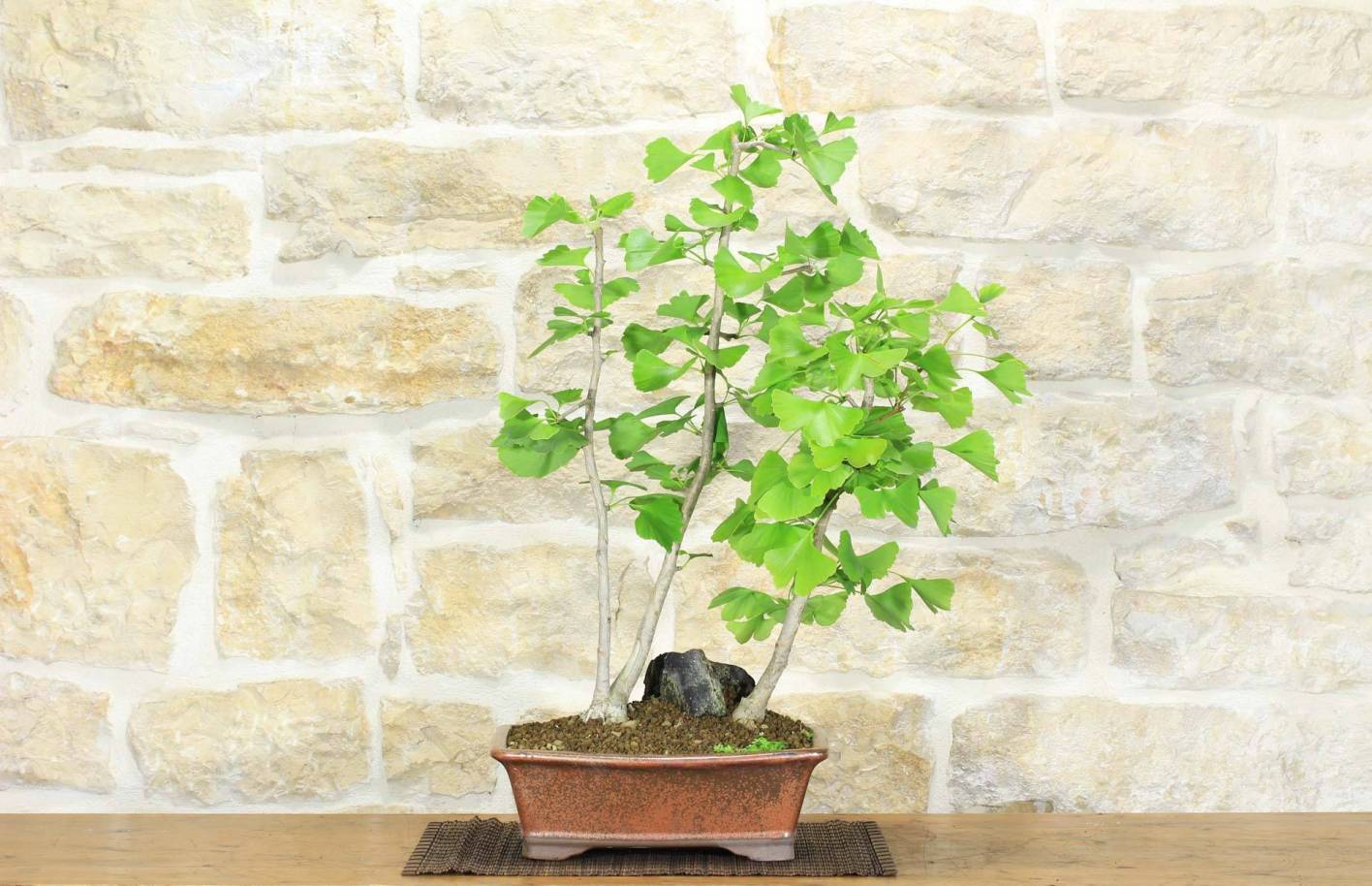
Ginkgo Biloba is a tree unique in the world, the last survivor of a botanical family that died out millions of years ago. For the bonsai grower, cultivating a Ginkgo means holding a piece of prehistory in your hands. It is unmistakable for its fan-shaped leaves, which in autumn turn a spectacular golden yellow before falling all together within a few days. It is an extremely long-lived plant, resistant to pollution and disease, but it requires patience because of its slow growth and its poor ability to close wounds.

Origin & species

Native to China, it is considered a sacred tree in the East. It is a dioecious plant, meaning there are separate male and female trees. A peculiarity of very old specimens is the formation of "Chi-chi" (or "Icho-chichi"), aerial roots similar to stalactites that hang downwards from the branches: if your bonsai should produce them, never cut them off! They are a sign of great age and value.

Position and microclimate

Ginkgo loves full sun.
Direct light is essential to reduce leaf size and make the autumn colour more intense.
However, young plants or those in very small pots can suffer from the overhead sun of July and August, which risks scorching the edges of the tender leaves. In midsummer, light afternoon shading is welcome.

Watering

Ginkgo roots are fleshy and full of water.
Water generously when the soil mix dries out, but pay close attention to waterlogging. If the soil stays soaked for too long, the roots rot quickly. In winter, keep the soil just slightly damp, since the fleshy roots can burst if they freeze while saturated with water.

Water quality

It is not a demanding plant. Tap water is fine. It is a very tough species that tolerates even imperfect water, but it appreciates rainwater to keep the substrate free of salts.

Substrate

Drainage is the absolute priority in order to safeguard the fleshy roots.

  • Recommended mix: 60% Akadama (for structure), 30% pumice and 10% general-purpose soil mix.
  • Akadama is particularly suitable because it allows immediate visual control of moisture and encourages fine roots.

Repotting

Carried out in spring (April), as soon as the buds begin to swell and turn green.
Young trees are repotted every one or two years, old ones every 3-5 years.
Caution: the roots are fragile. Tease them out gently and never prune the root system too drastically; Ginkgo struggles to recover from excessive reductions.

Fertilizing

Fertilize generously in spring to support the new growth.
Use solid slow-release organic fertilizer. In autumn, keep fertilizing until leaf fall: this is when the tree stores the energy for the following year's buds.

Flowering and fruiting

This occurs only on mature specimens (over 20-30 years old). Female trees produce fruits resembling apricots (in reality fleshy seeds) which, once ripe and fallen to the ground, give off an unpleasant smell of butyric acid (similar to rancid butter). For this reason, male specimens are often preferred in bonsai, or the fruits are removed before they ripen.

Structural pruning

Large cuts should be made in winter when the tree is bare.
A sore point: Ginkgo does not heal well. The wood tends to shrink back and does not form the closing "callus" as maples do. Avoid huge cuts if possible, and always cover wounds with plenty of cut paste to protect the inner wood.

Maintenance pruning

Ginkgo produces two types of branch: macroblasts (long extending branches) and brachyblasts (very short spur shoots in clusters that bear leaves and fruit).
During the season, shorten the long branches that grow beyond the outline, leaving 2-3 nodes, to encourage the formation of inner brachyblasts.

Pinching

In spring, when the new shoots lengthen and have produced 5-6 leaves, pinch them back leaving only 2 leaves. The last leaf left must point outwards, because it will determine the direction of the new branch.

Wiring & bending

Ginkgo bark is soft and spongy: it marks extremely easily.
If you use wire, wrap it gently (possibly protecting the branch with raffia or paper) and check it often. The branches tend to return to their original position, so wiring has to be repeated several times over the years.

Diseases and pests

It is incredibly resistant. It is rarely attacked by fungi or insects.
However, under stress or with poor ventilation, it may suffer attacks from:

  • Red spider mite: if the summer is scorching and dry.
  • Cottony scale insect: sometimes it nests at the base of the leaves.

Winter & protection

It withstands cold well.
The weak point is the fleshy roots in the pot: if they freeze and burst, the plant dies. In areas with harsh winters, protect the pot with mulch or place it in a cold greenhouse, but let the plant feel the cold so that it goes into dormancy.

Yearly calendar

  • January-February: winter pruning, root protection.
  • March: repotting (crucial moment).
  • April-May: awakening, fertilizing, pinching.
  • June-July: regular watering, full sun.
  • August: summer rest, afternoon shade if it is very hot.
  • September-October: autumn display (gold), fertilizer.
  • November-December: leaf fall, cleaning.

Useful products for this bonsai


Frequently Asked Questions about Ginkgo Biloba

Why do people say it stinks?
Only the ripe fruits of female specimens smell bad when they fall to the ground and rot. The bonsai, the tree itself and the leaves have no unpleasant smell at all. If you have a male tree, you will never have any problem.

Why do the leaves turn black in summer?
It is not a disease, but almost always excess water or waterlogging. The roots are suffocating. Reduce watering and check the drainage. If instead they are dry and crispy along the edges, the cause is too much dry wind or scorching sun.

How do I get smaller leaves?
Ginkgo leaves do not reduce as easily as those of maples. The secret is to grow it in full sun, not to overdo the nitrogen and to increase fine ramification (brachyblasts) over the years.

404 Error

This page is no longer among our branches.

The page you are looking for may have been moved, removed, or is no longer available. But your next bonsai, accessory, or gardening item is still here waiting for you.

Explore the main categories or use the search below.
404

No problem: we will help you quickly find bonsai, pots, accessories, and useful content.

A reference point for bonsai and gardening lovers

Quickly find bonsai, gardening items, pots, accessories, and useful content to better take care of your plants.

Explore the catalog