
€390.00

Home
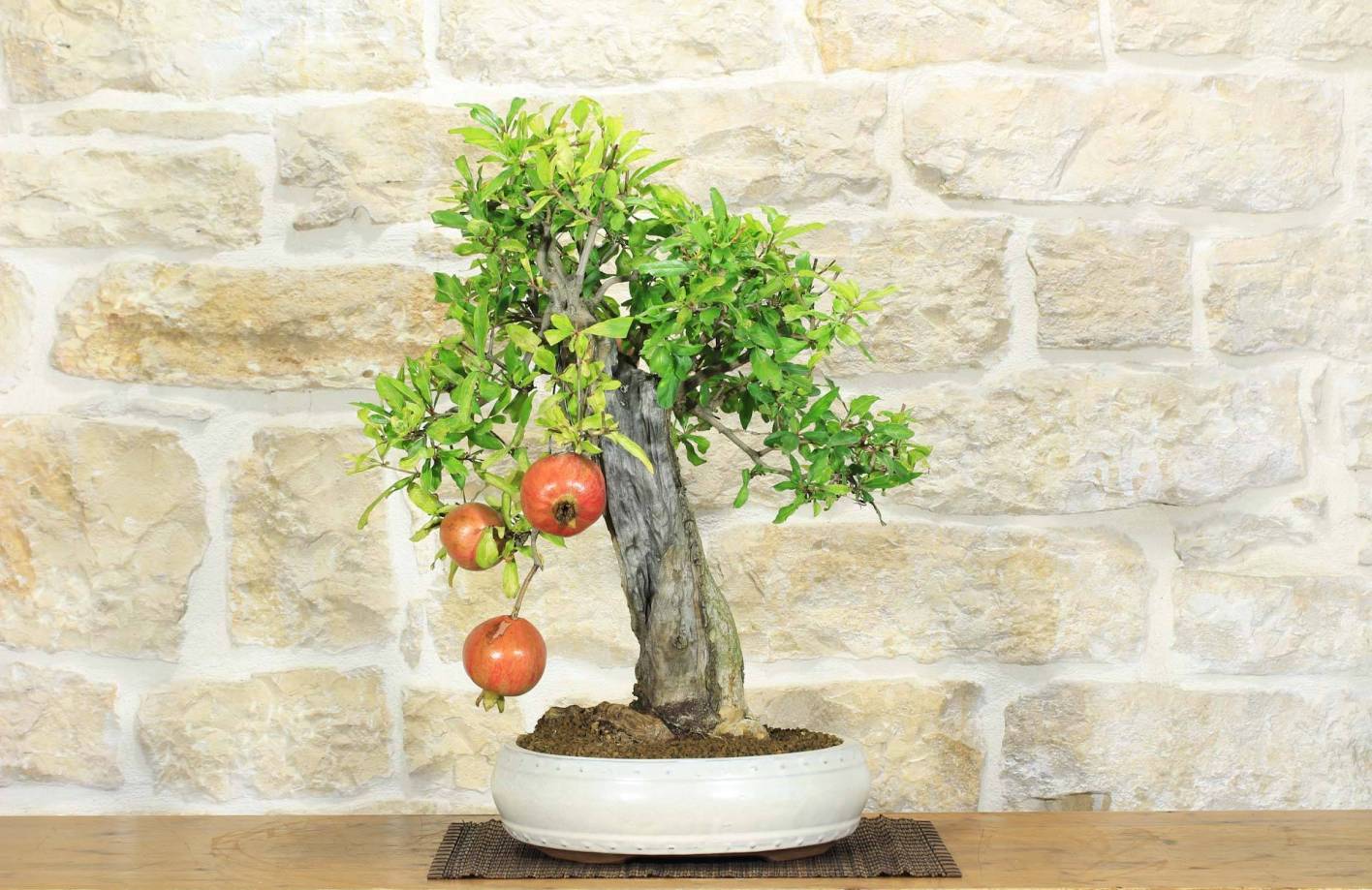
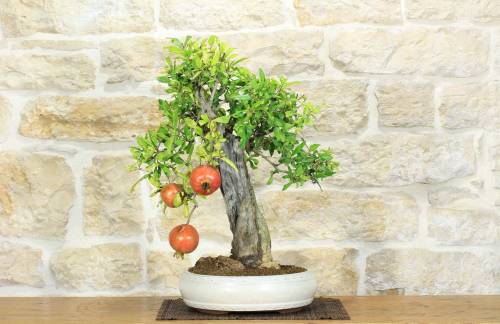
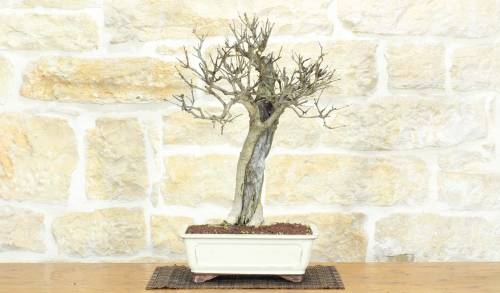
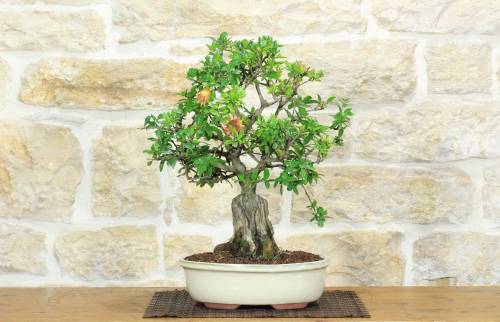
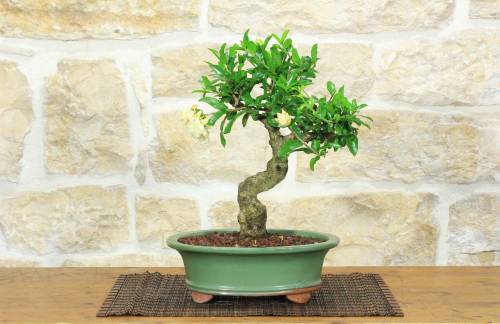
The Pomegranate (Punica granatum) is one of the most fascinating species for the bonsai grower. It is a tree that gives something in every season: in spring the leaves emerge a coppery red, in summer vivid orange-red flowers burst open, in autumn the fruit arrives and the leaves turn gold before falling, revealing an intricate woody structure. A symbol of fertility and abundance, it is a species that demands sun and water, but repays you with an unmatched rustic, elegant beauty.
Native to the area between Iran and the Himalayas, it has been grown around the Mediterranean for millennia.
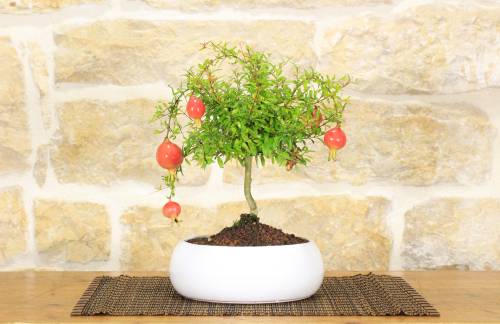
Several cultivars are used in bonsai, among them the widespread Dwarf Pomegranate (Punica granatum 'Nana'), perfect for beginners because it flowers and fruits easily even when young and has tiny leaves.
The Holy Grail for collectors, however, is the Japanese Nejikan variety. The term means "twisted trunk": this variety naturally develops a bark that spirals around the trunk, while the sap veins swell to create an incredible impression of age, even on trees that are not centuries old.
The Pomegranate is a sun worshipper.
It must stand in full sun throughout the growing season. Direct light is the indispensable fuel for flowering: keep it in the shade and it will make beautiful green leaves but you will not see a single flower.
It does not fear heat, in fact it enjoys it. Only during scorching summers with dry wind should you shade the pot a little so the roots do not cook.
Supporting flowers and fruit takes plenty of water.
Water generously as soon as the soil mix starts to dry on the surface. In summer the Pomegranate drinks a great deal and must never stay completely dry for too long, otherwise it will sacrifice first the fruit and then the leaves. In winter, cut back sharply and keep the soil barely moist.
It is not particularly demanding. Tap water is fine, but if it is excessively hard it may raise the soil pH too much over time. Ideally alternate with rainwater, especially if you notice chlorosis (yellow leaves).
It needs a free-draining substrate that can still hold the moisture required for fruiting.
Carry it out in spring (March-April), as soon as the buds begin to swell.
Young trees are repotted every 1-2 years, old ones (especially valuable Nejikan) every 3-4 years. Take care with the roots: they are fleshy and yellow, and do not like overly drastic cuts. Use pots slightly deeper than standard to ensure a stable water supply.
To get fruit you have to feed well.
Use solid organic fertilizer from spring to autumn.
Strategy for flowers: use a fertilizer high in Phosphorus (P) and Potassium (K) from May onwards. Excess Nitrogen (N) only produces leaves and lengthens the internodes, at the expense of the flowers.
The flowers appear from June to August. Note: the Pomegranate produces male flowers (bell-shaped, they drop after flowering) and hermaphrodite/female flowers (vase- or flask-shaped, with a swollen base).
Only the latter will turn into fruit. To help fruit set, do not water the flowers from above. Leave only 1 or 2 fruits per branch so as not to exhaust the tree.
Major cuts are made in late winter. Pomegranate wood is hard but brittle, and branches tend to die back if cut badly.
Always leave a small stub when removing a thick branch, to be tidied up the following year once it has dried, or seal immediately with cut paste.
During the season the Pomegranate throws out long, untidy shoots. Shorten them regularly to keep the shape of the canopy. Remember, though, that flowers form at the tips of short twigs: if you keep trimming everything back in May/June you will also be cutting away the future flowers.
Carried out on soft shoots in spring to densify the foliage pads. Trim back to 2 pairs of leaves as soon as the shoot extends. Stop pinching at the end of May if you want to see flowers.
The wood is very stiff and snaps easily ("like glass").
Wiring is done on young branches in summer. For old branches or Nejikan trunks, do not try to straighten or bend them by force: they will split. Use guy wires for gentle, gradual changes.
The Pomegranate drops its leaves and goes dormant. It withstands cold, but the roots in the pot suffer in hard frosts. In northern regions, protect the pot with mulch or horticultural fleece, or move it into a cold greenhouse (0-5°C). Nejikan, often being old and valuable specimens, need more careful protection.
Why does my Pomegranate drop its flowers without setting fruit?
It is normal for many flowers to fall: those are the male ones (bell-shaped), which have finished their job once they have produced pollen. If the female ones (vase-shaped) also fall, the cause may be poor pollination (lack of insects) or lack of water.
What exactly is a "Nejikan" Pomegranate?
Nejikan in Japanese means "trunk that twists". It is a genetic trait of certain old cultivars that develop swollen sap veins which appear to spiral around the trunk, giving the tree an ancient, dramatic look that is much sought after.
Can I eat the small fruits from the bonsai?
Yes, they are edible, but on the Dwarf Pomegranate they are very sour and full of seeds. Also, if you have used systemic insecticides or chemical products during the year, it is better not to eat them.
There are 7 products.