
€390.00

Home
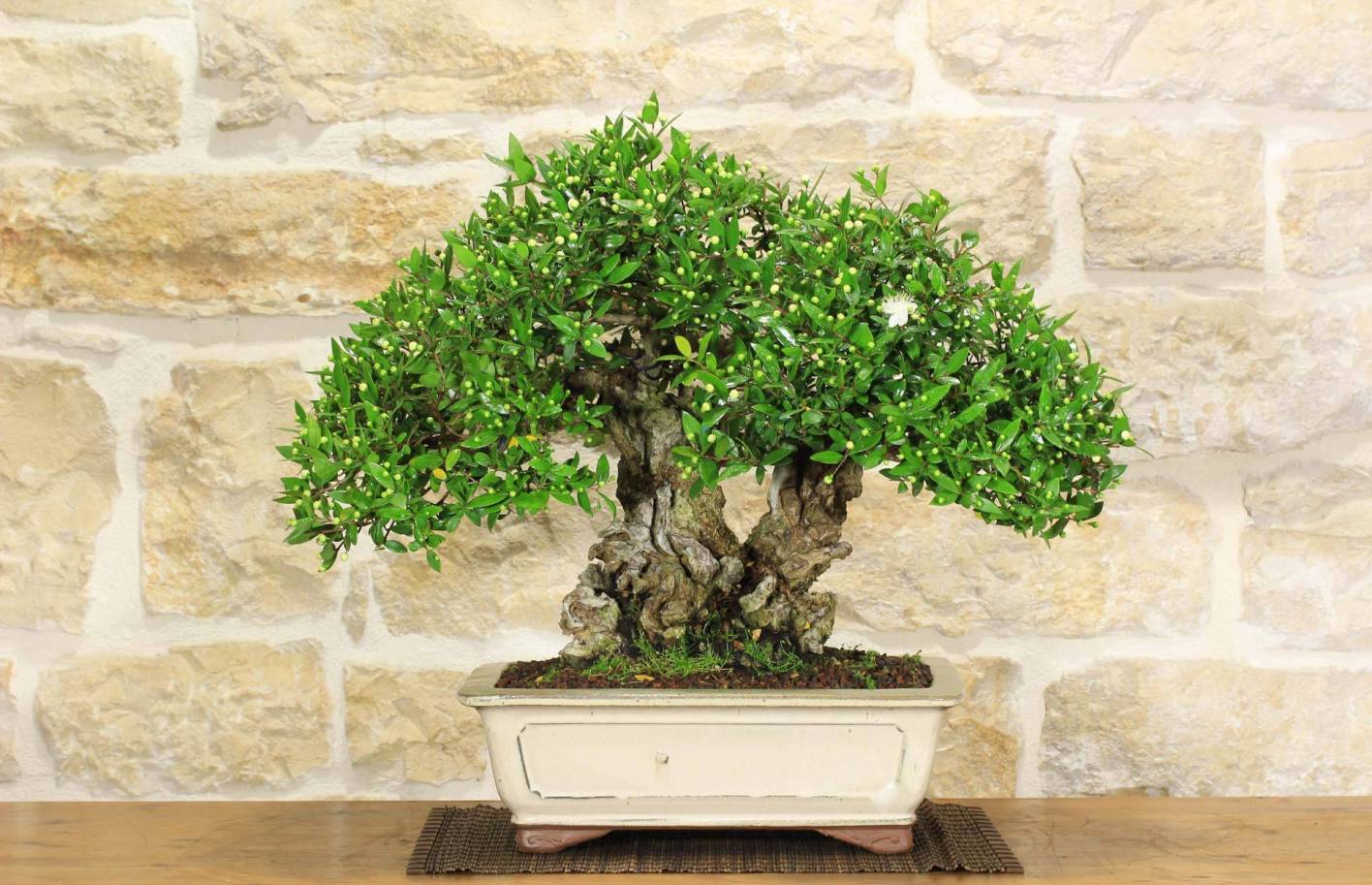
Myrtle (Myrtus communis) is the soul of the Mediterranean scrub, especially in Sardinia. It is an extraordinary bonsai not only for its looks, but for the sensory experience: just brush the canopy and you are wrapped in an intense balsamic scent. With its bark flaking away to reveal cinnamon-coloured wood, its white flowers full of stamens and its dark berries, it offers interest in every season. It is a generous plant, but it demands attention to water quality and climate.
Native to the Mediterranean basin, Myrtle is an evergreen shrub. In bonsai it is essential to tell the varieties apart, since they do not all react in the same way:
Myrtus Communis (type species): Larger leaves and long internodes. Less suited to small sizes (shohin), better for large trees.
"Tarentina" variety: The queen of bonsai. Very small leaves, short internodes and naturally compact growth. It flowers abundantly and produces white or black berries.
"Microphylla" or "Pumila" varieties: Often commercial synonyms of Tarentina or similar dwarf-growing cultivars. They are the best for building dense, well-proportioned ramification in a short time.
Myrtle loves full sun. Intense light is the secret to abundant flowering and compact growth (especially in Tarentina).
However, the roots in the pot suffer from excessive overheating. In midsummer, in the hottest areas, shading the pot or moving the plant into half shade in the afternoon helps prevent drought damage.
Unlike other Mediterranean species such as the Olive, Myrtle does not tolerate prolonged drought in a pot. If the soil mix dries out too much, the plant collapses rapidly.
Water regularly as soon as the surface of the soil dries. In summer it may need water every day. Beware of standing water though: the fine roots rot if left soaking.
Myrtle is a broadly lime-hating plant (it dislikes calcium carbonate).
Continuous use of hard tap water leads to iron chlorosis (yellow leaves). Use rainwater, or let tap water stand before use. Apply chelated iron periodically to bring the foliage back to a deep green.
It prefers a slightly acidic or neutral soil, fresh and free-draining.
Carried out in spring (March-April), every 2-3 years.
Myrtle has a dense, capillary root system. When repotting, comb out the roots gently and never reduce them drastically (30% at most). If you cut too much, the plant may stall or lose branches.
Feed from spring to autumn with organic fertilizer.
To encourage flowers, use a fertilizer richer in phosphorus and potassium before summer. Using products formulated for acid-loving plants is an excellent strategy for keeping the foliage dark green.
The flowers appear in late spring/summer: white, scented and with long stamens.
Berries follow (black or white depending on the variety) and ripen in autumn/winter. They are edible and highly decorative, but they use up energy: on trees still in training it is better to remove them.
Heavy cuts are made in late winter. Myrtle wood is very hard and brittle.
The plant tends to withdraw sap if the cut is not clean and precise. Always use sharp tools and cover the wound immediately with cut paste.
During the growing season the plant (especially Tarentina) grows into compact "cushions". You need to thin the inside of the canopy regularly so that light and air can pass through, otherwise the inner twigs will dry out and scale insects will take hold.
This is done on the new green shoots. As soon as they extend beyond the desired outline, pinch them back with scissors or fingers, leaving 2 pairs of leaves. This encourages the plant to push from the back buds, thickening the foliage.
Careful! Old Myrtle branches are as rigid as glass and snap without warning.
Wiring should be done only on young, green branches. The bark of mature branches flakes off naturally (an aesthetic feature, not a disease), so the wire could spoil this process or bite into the very tender bark underneath.
This is not an alpine plant. In the south it lives outdoors all year. In northern and central areas it should be sheltered in a cold greenhouse if temperatures drop below zero. It suffers from hard frosts, which can burn the fine branches.
Which variety is best to start with?
Without a doubt the Tarentina variety (or Microphylla). With naturally tiny leaves and very short internodes, it already looks like a "finished" bonsai even when young, making the styling work far easier than with the common broad-leaved Myrtle.
Why are the leaves turning yellow while the veins stay green?
That is a clear symptom of iron chlorosis. You are using water that is too hard, or the soil has lost its acidity. Apply chelated iron straight away and, if you can, start watering with rainwater or demineralised water.
The bark is peeling off in strips, is it diseased?
No, quite the opposite! It is a prized feature of mature Myrtle. The old bark exfoliates to reveal smooth cream or cinnamon-coloured wood underneath. Do not pull it off, let it fall away naturally.
There are 5 products.