
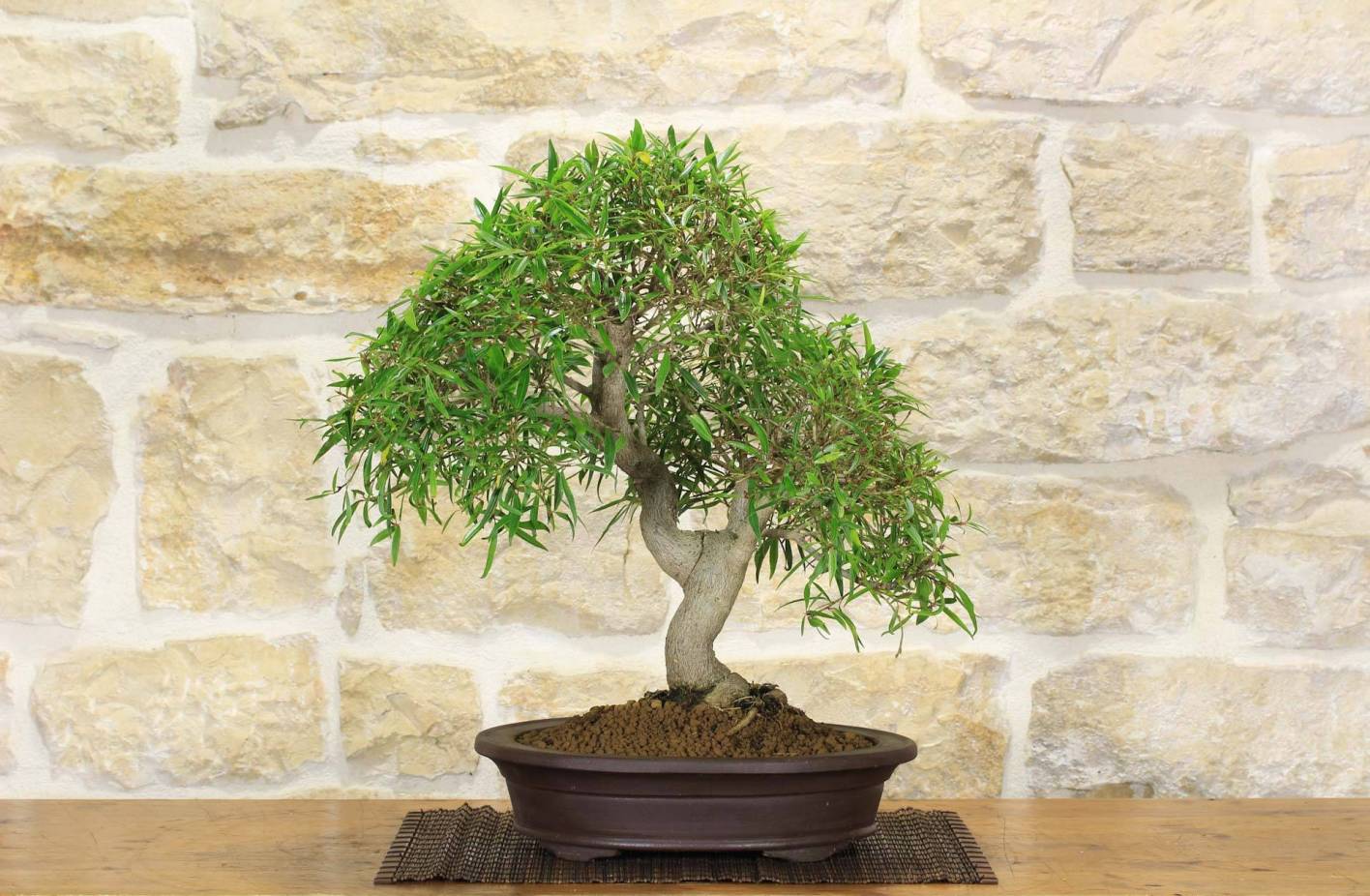
Ficus Nerifolia Bonsai: Care Guide, Willow Leaf

FICUS NERIFOLIA BONSAI

The Ficus Nerifolia Bonsai: The Elegance of Willow-Like Leaves

Ficus Nerifolia (also known as Ficus Salicifolia or "Willow Leaf Ficus") is a gem in the world of Ficus bonsai. Unlike its stockier cousins such as the Retusa, the Nerifolia boasts narrow, lanceolate, elongated leaves reminiscent of a weeping willow, giving it a unique grace and lightness. It is an outstanding species for bonsai because it naturally reduces leaf size and develops fine ramification far more quickly than other Ficus, making it perfect for creating naturalistic and scaled-down "Banyan" styles.

Origin & species

Native to south-eastern Asia (China, the Himalayas), it is an evergreen tropical plant. In the wild it can become a large tree. Its distinctive feature is the light green, tender foliage, which contrasts with the pale grey, slightly wrinkled bark of older specimens. It is much appreciated for its ability to form a powerful base (nebari) and aerial roots, although these are less invasive than in the Retusa.

Exposure and microclimate

Like all Ficus, it loves bright light.
Indoors (winter): It must be kept in the brightest spot in the house, preferably in front of a south-facing window. With too little light it stretches its internodes and loses its elegance.
Outdoors (summer): From May to September, take it outside! Ficus Nerifolia loves heat and sun (better if acclimatised gradually, so as not to scorch the tender leaves). Open air will make it burst with health and vigour.

Watering

The Nerifolia drinks regularly but does not like constantly "wet feet".
Water generously when the soil mix starts to dry out on the surface.
Ambient humidity is crucial: its thin leaves dehydrate more easily than the fleshy ones of the Retusa. Mist the canopy often, especially in winter with the heating on, to keep the leaves turgid and healthy.

Water quality

Use water at room temperature. Icy water is a shock for tropical roots and can cause the leaves to drop immediately. If your water is very hard, alternate with rainwater or demineralised water to avoid white deposits on the leaves and in the soil.

Substrate

It needs a soil that drains well but retains a certain amount of moisture.

  • Recommended mix: 60% Akadama (for structure and drainage) and 40% high quality ready-to-use bonsai soil mix.
  • If you live in a very dry climate you can slightly increase the organic component, but make sure water never stagnates in the saucer.

Repotting

Carried out in late spring or early summer (May-June), when night temperatures are steadily above 15-18°C.
The Nerifolia has vigorous roots that fill the pot quickly. Repot young specimens every 2 years. During repotting you can prune the roots decisively (up to one third or even half), teasing them out well to improve the radial nebari.

Fertilizing

This is a fast-growing species that uses up a lot of energy.
Fertilize regularly from spring to autumn. In spring, a liquid fertilizer every 10-15 days will give the necessary push. In autumn switch to a solid slow-release organic fertilizer. If kept indoors in the warmth and under grow lights, you can also fertilize lightly in winter.

Flowering and fruiting

Like other Ficus, it produces spherical syconia (small figs) that form in the leaf axils. On the Nerifolia they are small, green turning beige/reddish, and are not particularly decorative compared with the beautiful foliage.

Structural pruning

The branches of the Nerifolia are very flexible but thicken quickly.
Major setting cuts can be made all year round if the plant is healthy, but the best time is late spring. When you cut thick branches a lot of latex will flow out: dab it with wet paper and apply cut paste to prevent the latex from staining the bark.

Maintenance pruning

To keep the triangular or dome shape, you need to shorten the branches that "escape" from the outline. Cut above a leaf pointing outwards.
Defoliation (total or partial) in June works very well on this species: it stimulates a new flush of even smaller leaves and very dense ramification.

Pinching

An ongoing operation during the growing season. When a new shoot has produced 5-6 leaves, shorten it back to 2-3 leaves with scissors. This forces the plant not to stretch out and to produce back-budding shoots, filling the "gaps" in the canopy.

Wiring & bending

Ficus Nerifolia lends itself well to wiring because the branches stay flexible for a long time.
However, the bark is tender and the branch thickens quickly: the wire can bite in within 3-4 weeks in summer! Check it constantly and remove it at the first sign of marking.

Diseases and pests

  • Scale insect: The main enemy. Check the leaf joints and the inner branches carefully.
  • Red spider mite: If the air is too dry. Misting helps to prevent it.
  • Leaf drop (stress): If it loses healthy green leaves, it is often due to cold draughts, a sudden change of position or water that is too cold.

Winter & protection

It is a purely tropical plant. It fears the cold.
Below 12°C it suffers. In winter it must be kept strictly indoors or in a heated greenhouse. Beware, though, of the dry air from radiators: use saucers with damp expanded clay to create a humid microclimate around the plant.

Yearly calendar

  • January-February: Bright position indoors, misting, moderate watering.
  • March-April: Start liquid fertilizing, cleaning up.
  • May: Move outdoors (gradually), repotting.
  • June: Defoliation, pinching, cuttings (they root extremely easily).
  • July-August: Explosive growth, plenty of water, check the wire.
  • September: Bring indoors before the first cold nights.
  • October-December: Keep indoors, check for scale insects.

Useful products for this bonsai


Frequently Asked Questions about Ficus Nerifolia

What is the difference with Ficus Benjamina?
Although the leaves look somewhat similar, Ficus Nerifolia is much better suited to bonsai than the Benjamina. The Nerifolia ramifies better, has shorter internodes, tolerates drastic pruning better and its leaves reduce far more.

Why does it lose so many leaves in winter?
Usually it is a lack of light. Our houses in winter are dark for a tropical plant. Move it closer to the window (without letting it get cold from the glass) or use a grow light. Too much water in winter can also cause leaf drop.

Can cuttings be taken?
Yes, it is extremely easy! Small branches cut in June, placed in water or in damp perlite, root within a couple of weeks. It is the best way to obtain new bonsai for free.

404 Error

This page is no longer among our branches.

The page you are looking for may have been moved, removed, or is no longer available. But your next bonsai, accessory, or gardening item is still here waiting for you.

Explore the main categories or use the search below.
404

No problem: we will help you quickly find bonsai, pots, accessories, and useful content.

A reference point for bonsai and gardening lovers

Quickly find bonsai, gardening items, pots, accessories, and useful content to better take care of your plants.

Explore the catalog