Wild Apricot Bonsai: Care, Fruit and Rugged Bark

WILD APRICOT BONSAI

The Wild Apricot Bonsai: The King of Our Own Orchards

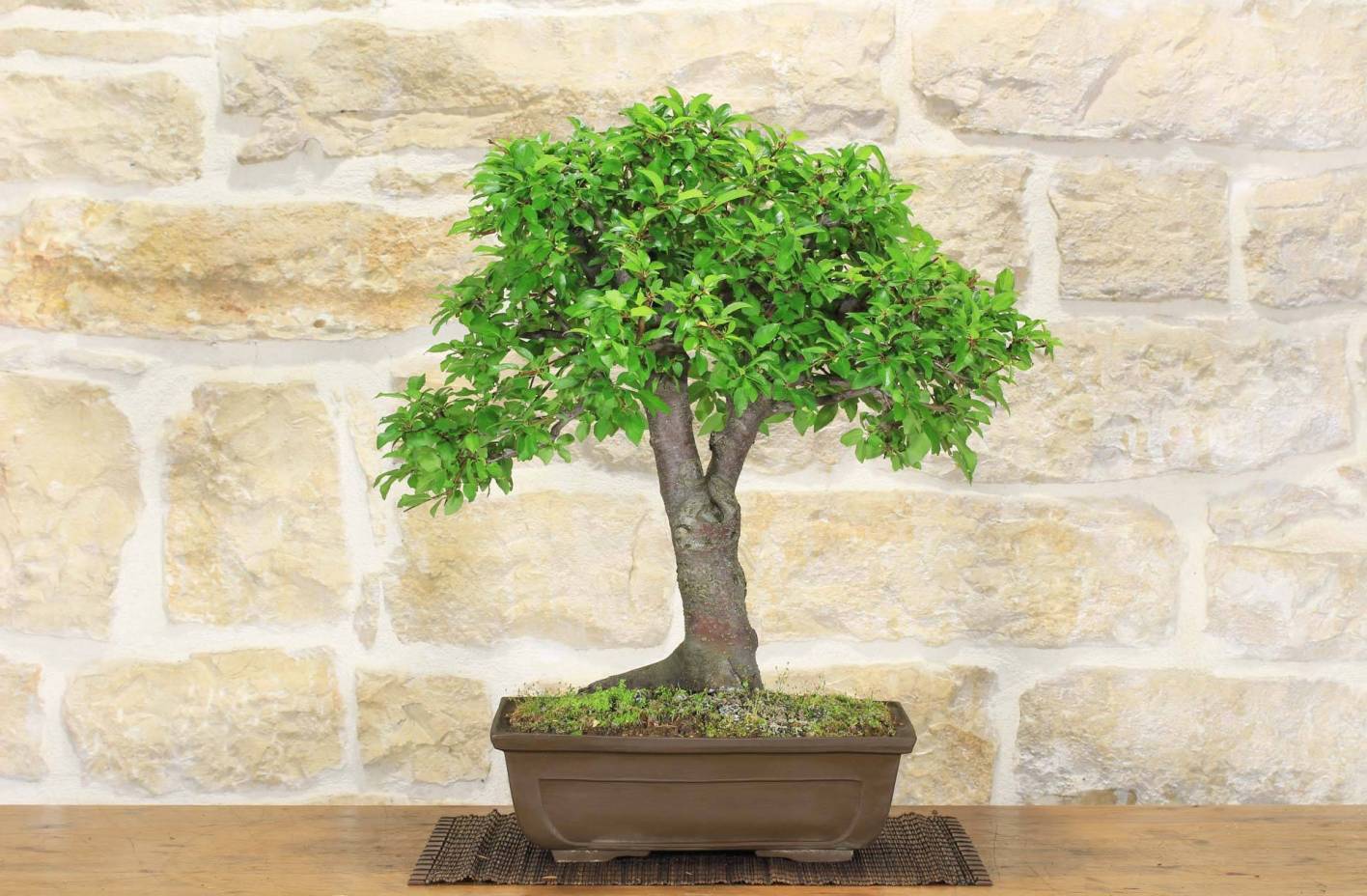
The Wild Apricot (Prunus armeniaca) is a bonsai of great character, deeply tied to the farming tradition of Southern Italy. Unlike its Japanese "cousin" (Prunus mume), which is grown almost exclusively for its flowers, our own apricot is loved for its early white/pinkish blooming but above all for its summer fruit and its bark. In mature specimens the trunk turns dark, fissured and rugged, giving the tree an ancient, weathered look ("vetustà") that few other fruit trees can match. It is a hardy, strong plant, made for our climate.

Origin & species

Native to Central Asia but naturalised in the Mediterranean for thousands of years. For bonsai, wild or seedling ("franco") varieties are preferred (often grown from seed or used as rootstock, such as the "bitter almond" or old local varieties) because they tend to have smaller leaves and shorter internodes than commercial fruiting varieties. It is a sturdy Rosaceae that loves the sun of our latitudes.

Position and microclimate

The apricot wants full sun.
Without direct sun the branches stretch out weakly, flowering will be poor and the fruit will not ripen.
It does not fear scorching summer heat or dry wind (sirocco), provided it is well watered. A ventilated position is essential to avoid fungi such as Monilia, which often attacks the flowers when the air is stagnant.

Watering

It is a vigorous plant that drinks a lot while the fruit and leaves are forming.
Water generously when the soil mix starts to dry out.
Unlike the mume (which likes cooler soils), our apricot tolerates short dry spells better, but if fruit has set never let it run short of water, or it will drop the fruit to save energy.

Water quality

Here is a great advantage: it is very tolerant.
Being used to Southern soils, it copes with tap water, even hard water, far better than azaleas or maples. Obviously water that is too hard is not ideal in the long run, but it does not require an obsessive use of osmosis water.

Soil mix

It prefers loamy, free-draining soils, even slightly calcareous ones.

  • Recommended mix: 50% Akadama (for fine roots), 30% pumice and 20% universal soil or humus.
  • Pumice is excellent for structure. The organic component feeds the fruit in summer.

Repotting

Carried out at the end of winter (February-March), as soon as the buds swell ("at brown stage"), before flowering.
The apricot produces thick, woody roots. During repotting, remove them to encourage fine feeder roots. Repot young trees every 2-3 years, old ones every 3-5. Note: like all Rosaceae, the roots are prone to crown gall (tumours), so use sterilised tools.

Fertilizing

Flowering and fruiting take a lot of energy.
Feed with solid organic fertilizer in autumn (essential for flower buds) and after fruit set in spring.
Avoid pure nitrogen during flowering so the flowers do not drop.

Flowering and fruiting

It flowers very early, often in February/March on bare branches. The flowers are white or pale pink.
The fruit ripens in summer.
Golden rule: the apricot tends to alternate (one heavy year, one light year). On a bonsai you must thin the fruit: leave only one or two on the whole tree if it is small, or one per main branch if it is large. Too many apricots can halt growth or even kill a branch through exhaustion.

Structural pruning

Done in winter. Apricot wood is hard but brittle, and splits if bent badly.
Important: this species suffers from sap withdrawal. When you cut a thick branch, do not cut flush with the trunk: leave a stub to be removed the following year once it has dried, and always cover with cut paste. Naturally dead branches (jin) look very good on this species.

Maintenance pruning

The apricot bears flowers on spurs (short, stubby shoots) two or three years old, or on mixed shoots of the previous year.
Do not prune everything "into a ball" in winter, or you will cut away all the flowers!
During summer, shorten vigorous shoots that run out of the silhouette to help the inner buds ripen.

Pinching

On new shoots that are not needed to extend the structure, pinch back to 2-3 leaves in late spring to thicken the foliage.

Wiring & bending

Branches lignify very quickly and become as stiff as stone.
Wiring should be done on young branches (1-2 years old). For older branches, use guy wires. The rugged bark is attractive but is spoilt if the wire bites in: check often.

Diseases and pests

  • Monilia: a fungus that dries out flowering twigs and rots the fruit (mummifying it). Prevent it with copper treatments at leaf fall and at bud break.
  • Capnodis: a black beetle whose larvae eat the roots. Dangerous in the South. Keep the plant healthy.
  • Gummosis: amber-coloured resin oozing from cuts or from the trunk. A sign of water stress or fungal problems.

Winter & protection

It is hardy and does not fear the cold. It can stay outdoors all year round.
The only risk is late frosts when the tree is already in flower (February/March): if the open flowers freeze, there goes the fruit. In that period, if there is frost, shelter it at night.

Yearly calendar

  • January: dormant pruning, copper treatment.
  • February-March: flowering, frost protection, repotting (after or before flowering).
  • April-May: leaf growth, fruit selection (thinning).
  • June-July: apricot harvest, light fertilizing.
  • August: regular watering, rest.
  • September-October: autumn fertilizing (PK), bud ripening.
  • November-December: leaf fall, clean-up.

Useful products for this bonsai


Frequently Asked Questions about the Wild Apricot

What is the difference from Prunus mume?
The mume (Japanese apricot) has smooth green branches, flowers in winter with a strong scent but has insignificant fruit and dislikes lime. Our own apricot (armeniaca) has dark, rugged bark, less scented flowers but edible and attractive fruit, and is far more resistant to heat and hard water.

Can I eat the apricots from the bonsai?
Yes, they are edible! Being wild varieties, they may be smaller and slightly more tart or fibrous than supermarket ones, but they are tasty. Avoid eating them if you have treated the plant with chemicals.

Why do I see "gum" coming out of the trunk?
That is gummosis. It is the tree's reaction to a trauma (an unprotected cut, a broken branch) or to a root problem (suffocation, fungus). Clean the wound, apply cut paste and check that you are not overwatering.

404 Error

This page is no longer among our branches.

The page you are looking for may have been moved, removed, or is no longer available. But your next bonsai, accessory, or gardening item is still here waiting for you.

Explore the main categories or use the search below.
404

No problem: we will help you quickly find bonsai, pots, accessories, and useful content.

A reference point for bonsai and gardening lovers

Quickly find bonsai, gardening items, pots, accessories, and useful content to better take care of your plants.

Explore the catalog