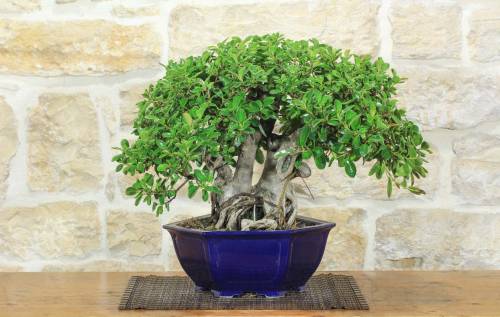

€390.00

Home
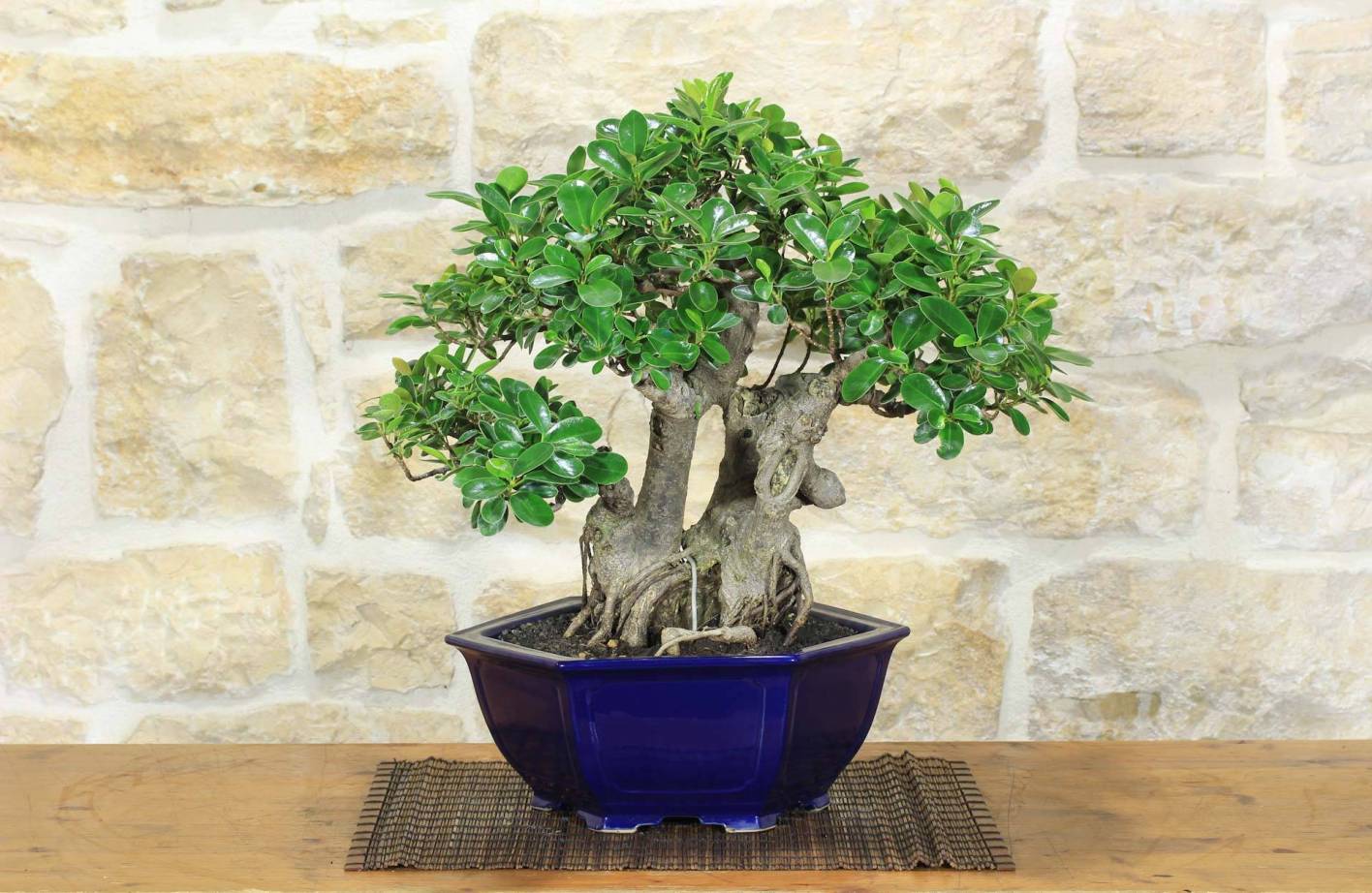
The Ficus Panda is a special cultivar of the more common Ficus Retusa or Microcarpa. It is immediately recognisable by its leaves: unlike the classic Ficus, the Panda has rounder, thicker, waxy leaves of a very dark, glossy green. It is perhaps the indoor bonsai par excellence: it forgives watering mistakes, tolerates the dry air of our homes better than other plants and is aesthetically very elegant. If you want a bonsai that looks like a modern sculpture and needs little maintenance, the Panda is your tree.
Native to the tropical regions of Asia (Malaysia, Borneo), the Ficus Panda is an evergreen plant. Its most fascinating botanical feature, besides the leaf shape, is its ability to put out aerial roots from the branches which, on reaching the ground, become new trunks, creating the "mangrove forest" or "Banyan style" effect. It is a vigorous plant that never truly goes into full dormancy if kept warm.
It is a tropical plant, so it loves light and warmth (above 15°C).
Indoors (winter/autumn): Place it in front of a very bright window (south or west facing), but away from radiators, which dry out the air.
Outdoors (spring/summer): From May to September, take it outside! The Ficus Panda thrives outdoors. Give it a bright position, but not under the full midday sun if it is not used to it, to avoid scorching the fleshy leaves.
The Panda's thick leaves store water, so it stands up to drought better than other bonsai.
Water when the soil mix feels dry to the touch. Never leave standing water in the saucer (rot is guaranteed).
The grower's trick: Mist the foliage often with demineralised water. The Ficus likes ambient humidity, and this also helps keep pests away and encourages aerial roots.
Use water at room temperature. Icy tap water in winter can give the tropical roots a thermal shock. If the water is hard, wipe the leaves now and then with a damp cloth to remove the white film and let them breathe.
As it is often grown indoors, the substrate must drain but not dry out within an hour.
Carry it out in late spring (May-June), when the plant is in full growth. The Ficus tolerates drastic root pruning well.
Remove the thick roots circling the pot and favour the fine ones. If you cut large roots, the plant will exude white latex: don't worry, it is its natural wound sealant.
It is a hungry plant. Feed it all year round if you keep it indoors in the warm (reducing the dose to once a month in winter).
In spring and summer, use liquid fertilizer every 15 days or solid fertilizer every month to push growth. A good supply of nitrogen will make the leaves dark green and glossy.
It produces small spherical "figs" (syconia), green at first and later reddish/black. They are not edible and are barely noticeable on a bonsai, but they are a sign of good health.
Ficus branches are flexible and rubbery. Shaping cuts can be made all year round, but spring is best.
Watch out for the latex: When you cut, a sticky white liquid will come out. If it runs down the bark and dries, it leaves an ugly black stain. Dab the cut straight away with cold water or absorbent paper.
To keep the foliage pads compact, you need to pinch back regularly. When a shoot has made 5-6 leaves, cut back leaving 2.
If the bonsai loses its inner shape (it empties out), carry out a defoliation in June (remove the large leaves leaving the petiole) to stimulate new inner buds.
The Ficus takes wire well, but the branches thicken at the speed of light. The wire can bite in within 3-4 weeks in summer! Check it very often.
It is best to wire while the branches are still green and flexible.
The Ficus Panda is a tank, but indoors it has two enemies:
Absolutely indoors (or in a heated greenhouse) if you live where the temperature drops below 10-12°C. Cold kills it. Look for a bright room, though, not a dark corner, otherwise it will drop all its leaves.
It has dropped a lot of leaves since I brought it home, is it dying?
Probably not. The Ficus is a creature of habit and hates changes of light and position. If you move it from the nursery to your home, it reacts by dropping leaves. Find it a bright spot and don't move it again. It will recover within a few weeks.
How do I get aerial roots to grow?
You need very high ambient humidity (almost 100%). You can try wrapping the trunk or branches with damp sphagnum moss, or putting the tree in a "mini greenhouse" of clear plastic for a few weeks in summer.
Why are the leaves sticky?
If the leaves are sticky and shiny, 99% of the time it is scale insects. Look carefully under the leaves and on the branches: you will see small brown shields or white flecks. Treat straight away.
There is 1 product.