
€390.00

Home
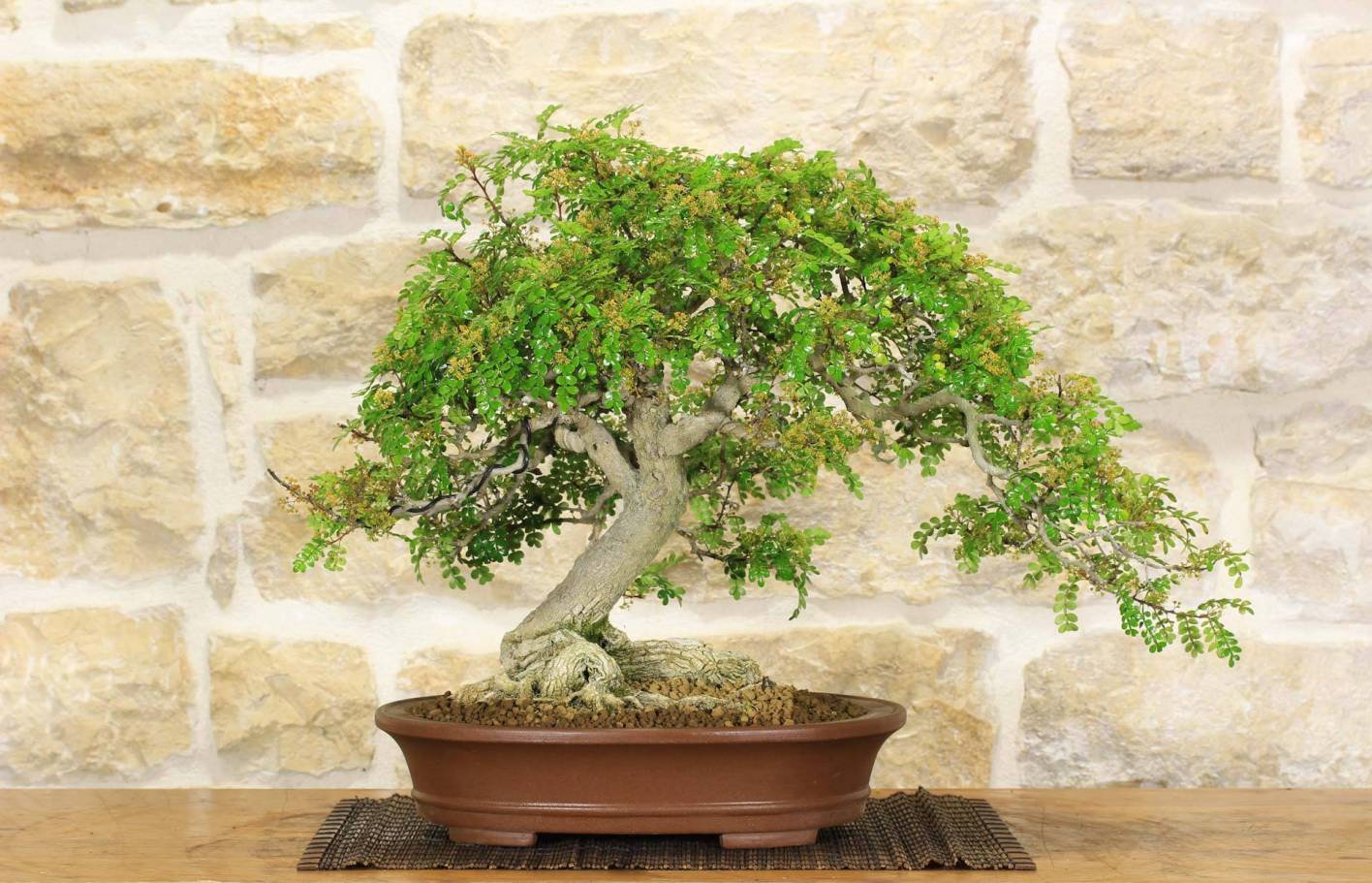
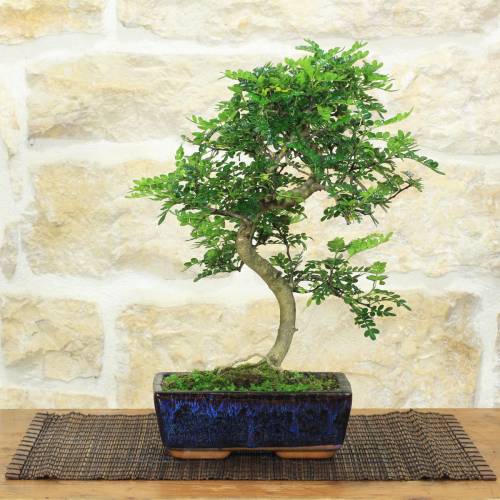
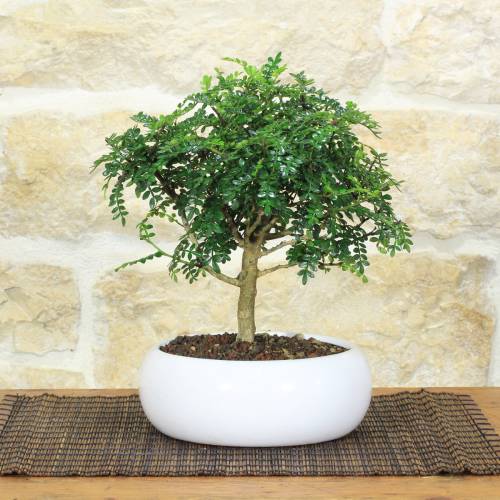
The Sichuan Pepper or Japanese Pepper (Zanthoxylum piperitum) is a bonsai that wins you over by smell before sight. It belongs to the Rutaceae family (the same as citrus, not the black pepper on the table!) and this explains its fragrance: just brush against its small glossy leaves to release an intense, fresh, spicy aroma reminiscent of lemon and pepper. It is a tree much appreciated for its bright green compound leaves, the rugged bark that gives it an aged look and its good adaptability to life in a pot.
Native to China and Japan, in the wild it is a thorny shrub. The name Zanthoxylum comes from the Greek and means "yellow wood". It is famous in cooking because the spice known as "Sichuan pepper" is obtained from its fruits. In bonsai it is excellent because it naturally reduces leaf size and branches densely.
It is a versatile plant, considered a "cold greenhouse" or semi-tropical species.
Spring/Summer: It must stay outdoors, in full sun or light partial shade. Sun stimulates the production of essential oils (hence the scent) and keeps the internodes short.
Winter: In mild areas (southern Italy) it can stay outside in a sheltered spot. Further north, protect it in a cold greenhouse or bring it indoors into a cool, very bright room, away from radiators.
The Pepper tree drinks a lot while in growth, but its fleshy roots are prone to rot.
Water generously when the soil mix is dry on the surface.
Ambient humidity is essential: if you keep it indoors or if the weather is very hot, mist the foliage every day. If the air is too dry, it will drop its leaves.
Like the other Rutaceae (citrus), it prefers water that is not too hard. Excess limescale can lead to chlorosis (yellow leaves). Use settled or rainwater if possible.
It needs a soil that drains perfectly but stays fresh.
Carried out in spring (April-May), every 2-3 years.
The roots of the Pepper tree have an intense scent (yellow and aromatic). During repotting, untangle the roots well but do not be too aggressive with the cuts: remove about a third of the old, thick roots to stimulate the fine ones.
Fertilize regularly from spring to autumn.
In spring use a balanced fertilizer to support growth. In autumn, prefer a slow-release organic fertilizer richer in potassium to prepare the plant for the cold.
In spring it produces small yellow/greenish flowers, not very showy.
If pollinated, in autumn they turn into small reddish berries which, on opening, reveal a glossy black seed. They are very decorative and aromatic (this is the spice itself!).
Shaping cuts are made in late winter. Careful: the plant has thorns!
The wood is fairly soft. Always use cut paste on medium and large cuts, since Zanthoxylum tends to pull back the sap if the wound is left open.
During the growing season the plant grows vigorously. Shorten the branches that break out of the silhouette to keep a tidy look. Always cut just above a compound leaf.
To thicken the foliage pads, pinch the new shoots when they have produced 4-5 leaves, cutting them back to 2. This will stimulate the axillary buds to produce new twigs.
Young branches are flexible and easy to wire, but be careful: they lignify and stiffen very quickly (within a few weeks in summer).
Check the wire frequently because the bark is soft and marks immediately. Watch out for the thorns when you wrap the wire!
It suffers from hard frosts. If you live in a cold region, protect the bonsai in a cold greenhouse (ideal temperature between 5°C and 10°C) or in an unheated but bright room (stairwell, veranda). If it drops its leaves in winter because of the cold, do not worry: it will flush out new growth in spring.
Why is it called "Pepper" if it is not pepper?
Because the fruits, once dried, have a pungent, aromatic flavour and are used as a spice in Asia. Botanically, however, it has nothing to do with Piper nigrum (black peppercorns), but is a relative of lemons and oranges.
Is it an indoor or outdoor plant?
It is somewhere in between. In mild climates it is an outdoor tree. In colder regions it stays outdoors in summer and indoors (cool) in winter. It does not tolerate the dry, hot air of our homes in winter, so keep it away from radiators.
Why do the leaves turn yellow and drop?
If it happens in winter, it may be natural renewal or cold. If it happens in summer, it is often the fault of the red spider mite (check for tiny webs under the leaves) or of a lack of water.
There are 2 products.