Yew Bonsai: Care Guide, Baccata vs Cuspidata

YEW BONSAI

The Yew Bonsai: The Tree of Eternity

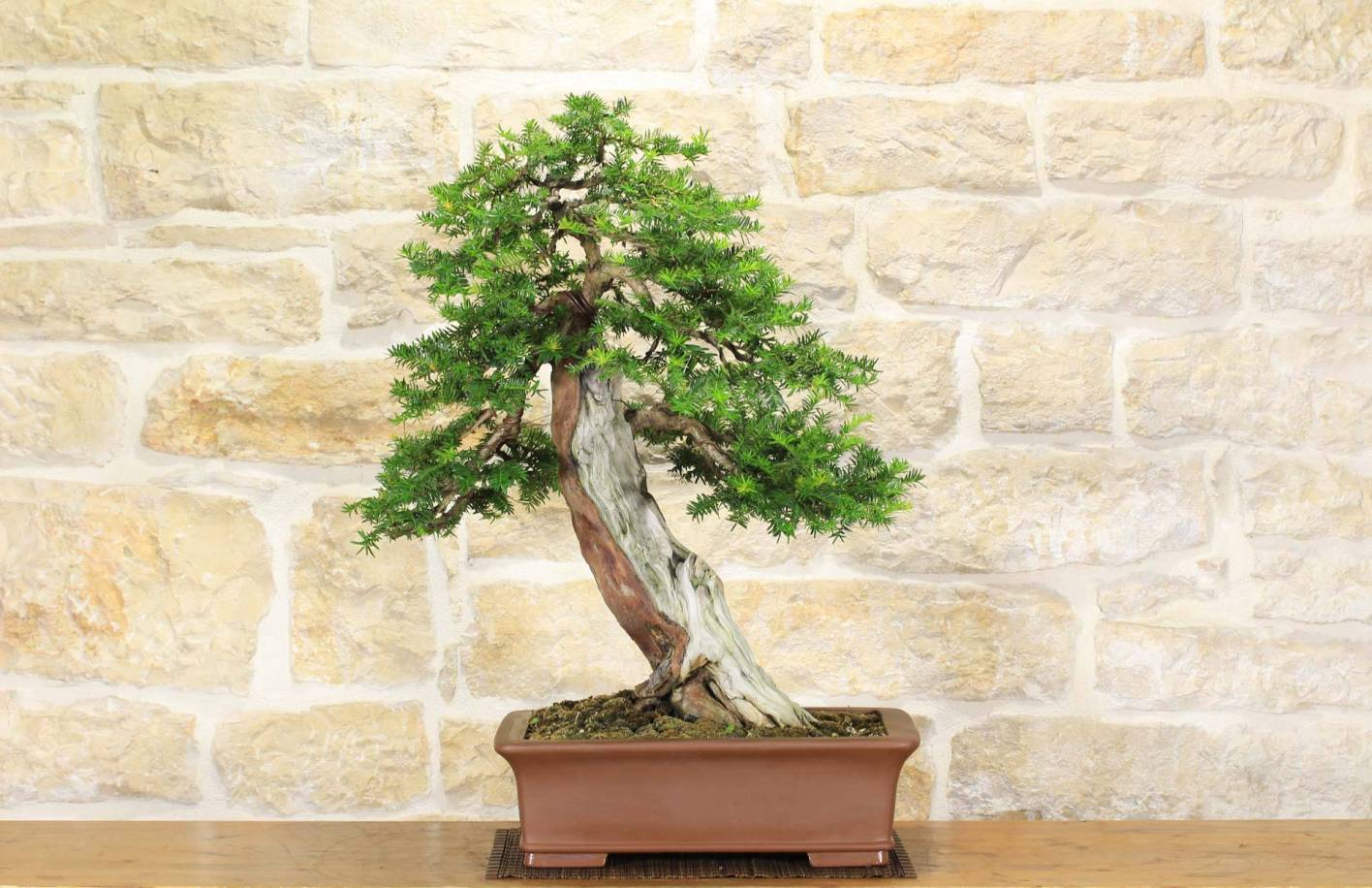
The Yew (Taxus) is one of the most valued and prestigious conifers in the bonsai world. Often called "the tree of death" because of how toxic its parts are, for bonsai growers it is the tree of eternal life: it is extremely long-lived, survives extreme conditions and has an ability rare among conifers, that of budding back on old wood. It is known for the spectacular colour contrast between the dark red live vein, the deep green foliage and the white, polished deadwood (jin and shari) that lasts for decades.

Origin & species: Baccata vs Cuspidata

Although growing techniques are much the same, two main species dominate in bonsai:
Taxus Baccata (European Yew): Native to Europe and North Africa. It has very dark green needles arranged like a comb (flat) along the branches. It is very vigorous and perfectly suited to our climate.
Taxus Cuspidata (Japanese Yew): Native to Japan (where it is called Ichii). Its needles are slightly stiffer, arranged radially around the branch and a brighter or yellowish green at the tips. It is the more sought-after species for bonsai because it tends to stay more compact and its deadwood is considered superior in hardness and colour.

Exposure and microclimate

The Yew is a shade-loving plant in nature, but as a bonsai it needs light.
Half shade or full sun: ideally a sunny position in spring and autumn, with shade during the central hours of summer.
*Taxus Cuspidata* in particular dislikes the scorching afternoon sun, which can burn the needles (turning them brown). A bright but cool position gives needles a fine deep green colour.

Watering

The Yew likes humidity but hates standing water.
Its roots are fleshy and rot easily if the soil does not breathe. Water when the soil mix is slightly dry on the surface. It greatly appreciates misting over the foliage (especially in the evening in summer), which keeps the needles hydrated and clean.

Water quality

It is a tolerant plant. Tap water is fine, but if it is very hard you may notice white deposits on the dark needles over time. Rainwater is always the better choice to avoid salt build-up in the soil.

Substrate

Drainage is the absolute priority. Use a very granular substrate.

  • Recommended mix: 40% Akadama, 40% Kiryuzuna (or pumice) and 20% good quality general-purpose soil mix.
  • Kiryu is a Japanese substrate made specifically for conifers that keeps its structure for years, which matters for plants that are repotted rarely, such as the Yew.

Repotting

Carried out in spring (March-April) or in early autumn (September).
The Yew is repotted every 3-5 years. The roots are dense and fine: tease them out carefully. Unlike pines, the Yew takes root reduction better, but never overdo it on old specimens. Always leave some of the old soil to protect the microflora.

Fertilizing

This is a tree that "eats" a lot in order to produce new growth and thicken its wood.
Fertilize generously with solid organic fertilizer ("cakes") in spring and above all in autumn. Good autumn feeding is the secret to strong buds in spring.

Flowering and fruiting

It is a dioecious plant (male and female specimens).
Female plants produce the well-known red arils: fleshy false fruits that wrap around the seed. They are very decorative in autumn (like little red lanterns against the dark green), but remember that the seed inside is poisonous.

Structural pruning

Large cuts are made in winter.
Yew wood is hard but elastic. Branches not needed for the design are often not cut away but stripped of bark and turned into jin (dead branches) to give the plant character. Use gouges and pliers to work the deadwood.

Maintenance pruning

The Yew has a gift rare in a conifer: it buds back on old wood.
If you prune a long branch, new buds will very likely appear further back, close to the trunk. This makes rebuilding the canopy and compacting the tree far easier than with a pine. Shorten long branches in autumn.

Pinching

In late spring and summer the new light green shoots extend.
Pinch them with your fingers or cut them with scissors, leaving only a short piece of new growth. This keeps the foliage pads dense and flat.

Wiring & bending

Yew wood is incredibly flexible. Extreme bends can be made without snapping the branch (but always proceed carefully and with raffia).
Wire is applied in autumn/winter. Careful: check it often in spring, because the bark is alive and the wire can bite in and leave ugly marks.

Diseases and pests

  • Vine weevil: The number one enemy. The larvae eat the roots, the adults eat the edge of the needles (crescent-shaped "bites"). If you see these signs, treat the soil with specific products or nematodes.
  • Scale insect: It hides among the dense needles.

Winter & protection

It is very cold hardy (especially *Cuspidata*, which comes from harsh climates).
However, the roots in a pot suffer from prolonged frost. Protect the pot with mulch or fleece if temperatures drop well below zero. Never keep it indoors.

Yearly calendar

  • January-February: Jin and shari work, brushing on lime sulphur.
  • March-April: Repotting, start of fertilizing.
  • May-June: Pinching shoots, pest checks.
  • July-August: Half shade, regular watering.
  • September-October: Heavy fertilizing, cutting back.
  • November-December: Winter protection, wiring.

Useful products for this bonsai


Frequently asked questions about the Yew

Is it true that it is poisonous?
Yes, very toxic. Needles, bark and seeds contain taxine. The only part that is not poisonous is the red flesh of the aril, but the seed inside it is. Wash your hands after working on it and keep it away from animals that might chew on it.

How do I tell Taxus Baccata from Cuspidata?
*Baccata* has needles set in two opposite rows (like a comb) and of a dark, sombre green. *Cuspidata* has needles arranged irregularly and radially around the branch, more pointed (cuspidate) and often a more yellowish/brighter green.

Can I cut back all the green branches?
Unlike pines, the Yew is generous: if you cut a branch back leaving only old wood, it will very likely flush out new growth from the bare wood, provided the tree is healthy and well fed.

404 Error

This page is no longer among our branches.

The page you are looking for may have been moved, removed, or is no longer available. But your next bonsai, accessory, or gardening item is still here waiting for you.

Explore the main categories or use the search below.
404

No problem: we will help you quickly find bonsai, pots, accessories, and useful content.

A reference point for bonsai and gardening lovers

Quickly find bonsai, gardening items, pots, accessories, and useful content to better take care of your plants.

Explore the catalog