Chestnut Bonsai: Care, Fruit & Guide (Castanea Sativa)

CHESTNUT BONSAI

The Chestnut Bonsai: The Generous Giant of the Woods

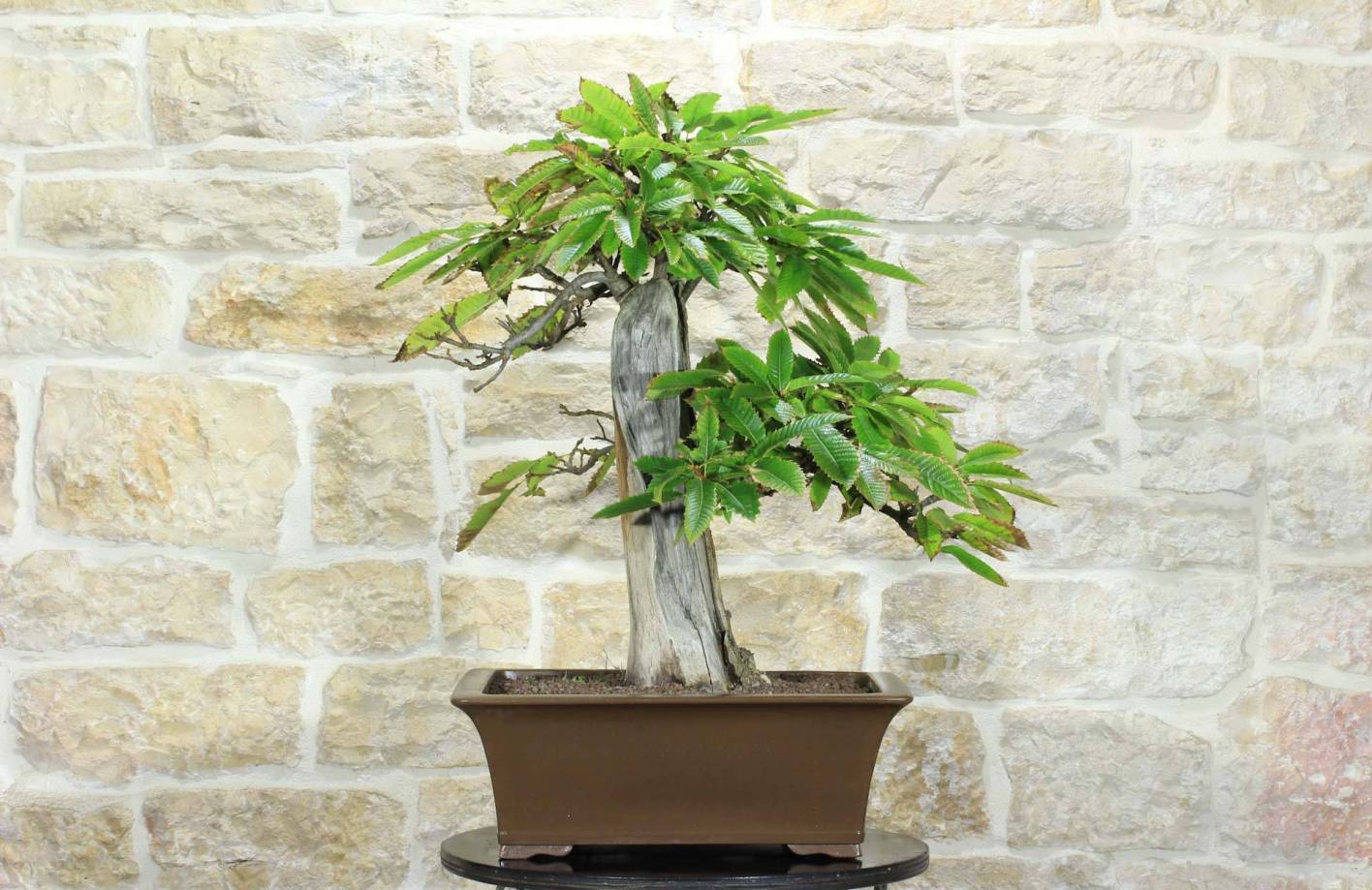
The Chestnut (Castanea sativa) is a tree that evokes golden autumns and ancient woodland. As a bonsai it is an uncommon choice but a fascinating one, reserved for those who like trees "with character". Its large, toothed, glossy leaves and the bark that splits vertically with age give it a powerful, aged look. The real challenge with chestnut is managing leaf size and obtaining fruit (the burrs), but when you succeed the satisfaction is hard to beat.

Origin & species

Native to southern Europe and Asia Minor, it is the king of our hill and mountain areas up to 1000 metres. It belongs to the Fagaceae family. European chestnut is often used for bonsai, but the Japanese Chestnut (Castanea crenata) is also much appreciated because it tends to have naturally smaller leaves and greater disease resistance.

Exposure and microclimate

The Chestnut loves light but suffers in scorching heat.
Spring/Autumn: Full sun. This helps reduce leaf size and prepare for flowering.
Summer: From June to the end of August, especially if you live on the plains or in the South, it should be moved to half shade. Its leaves tend to scorch at the edges ("sunburn") if the air is too dry and hot.

Watering

It is not a bog plant, but not a desert plant either.
The soil must always stay slightly damp (cool). If it dries out too much, the chestnut reacts by letting half the leaf dry up. Water generously but make sure the water drains straight out of the drainage holes.

Water quality

Care is needed here: the Chestnut is a calcifuge plant (it hates lime).
If you use hard tap water, over time the leaves will turn yellow with green veins (chlorosis). Use rainwater, osmosis water or, if you use tap water, let it stand and periodically apply chelated iron or acidifying products.

Soil mix

An acid-leaning soil mix is essential.

  • Recommended mix: 40% Kanuma (Japanese acid substrate), 40% pumice and 20% leaf mould or acid peat.
  • If you do not have Kanuma, increase the blond peat or use Akadama, but avoid limestone or marble chippings in the pot like the plague.

Repotting

Carried out in late winter, before the buds open.
The roots are vigorous taproots: on young plants they should be shortened decisively to stimulate fine feeder roots. Repot every 2-3 years. Use deep glazed or earth-coloured pots that retain moisture.

Fertilizing

It is a vigorous tree. Fertilize in spring with a balanced organic fertilizer.
If you want to see fruit, in late summer use a "flowering" fertilizer (low nitrogen, high potassium and phosphorus). Careful: an excess of nitrogen will give you enormous leaves that are impossible to manage.

Flowering and fruiting

It flowers in summer with long scented yellow catkins (the smell is peculiar, not everyone likes it!). The fruits are the famous burrs.
Please note: To get chestnuts you often need two trees close together for cross-pollination, unless you have a self-fertile variety. In a pot it is difficult to ripen the fruit without exhausting the plant: leave only one or two for the look of it.

Structural pruning

The wood is hard but tends to die back if cut badly. Large cuts are made in winter.
Use sharp concave cutters and always cover with cut paste. The chestnut does not close wounds as quickly as a maple; it tends to create deadwood around the cut.

Maintenance pruning

Trim new shoots back to 2 leaves when they have 5-6.
Defoliation (cutting the leaves in June) is risky on chestnut: do it only on very healthy, young specimens. It is often better to simply cut the largest leaves in half to let light reach the inner branches.

Wiring & bending

Young branches are green and flexible, but they lignify quickly and become stiff. Wire in spring/summer. Watch out for the smooth bark of young branches, which marks immediately.

Diseases and pests

The Chestnut has specific enemies:

  • Chestnut gall wasp (Asian wasp): It creates reddish galls (swellings) on leaves and shoots, halting growth. If you see them, cut off the affected parts at once and burn them.
  • Chestnut blight: A fungus that creates sunken reddish areas on the bark. It is lethal. Always disinfect your tools.
  • Red spider mite: In summer, in hot dry weather.

Winter & protection

It is well able to withstand cold. Protect only the roots in case of prolonged hard frost, especially if you use small pots, because the fleshy roots can rot if they freeze and then thaw.

Yearly calendar

  • January-February: Winter pruning, deadwood treatments.
  • March: Repotting (with acid soil mix!).
  • April-May: Fertilizing, checking for gall wasp.
  • June-July: Half shade, steady watering.
  • August: Summer rest, watch for spider mites.
  • September-October: Burrs ripening (if present), PK fertilizer.
  • November-December: Autumn colours, leaf fall.

Useful products for this bonsai


Frequently asked questions about the Chestnut

Can I make a bonsai from a supermarket chestnut?
In theory yes, but the chestnuts we eat are often hybrids selected to produce large fruit and huge trees, with giant leaves. For bonsai it is much better to look for wild chestnuts or the Japanese species (C. crenata), which has leaves and habit better suited to the purpose.

Why do the leaves have brown, dry edges in summer?
That is typical. It can be excess lime in the water, too much direct sun during the hottest hours or potassium deficiency. Use more acidic water and move the tree to a cooler spot in the afternoon.

My chestnut has red "little balls" on the leaves, what are they?
It is the gall wasp. Do not use insecticides at random; they often do not work because the larva is protected inside the gall. The best remedy is mechanical: remove and destroy the affected parts as soon as they form.

404 Error

This page is no longer among our branches.

The page you are looking for may have been moved, removed, or is no longer available. But your next bonsai, accessory, or gardening item is still here waiting for you.

Explore the main categories or use the search below.
404

No problem: we will help you quickly find bonsai, pots, accessories, and useful content.

A reference point for bonsai and gardening lovers

Quickly find bonsai, gardening items, pots, accessories, and useful content to better take care of your plants.

Explore the catalog