Phoenicean Juniper Bonsai: Care, Deadwood Guide

PHOENICEAN JUNIPER BONSAI

The Phoenicean Juniper Bonsai: The Jewel of the Mediterranean

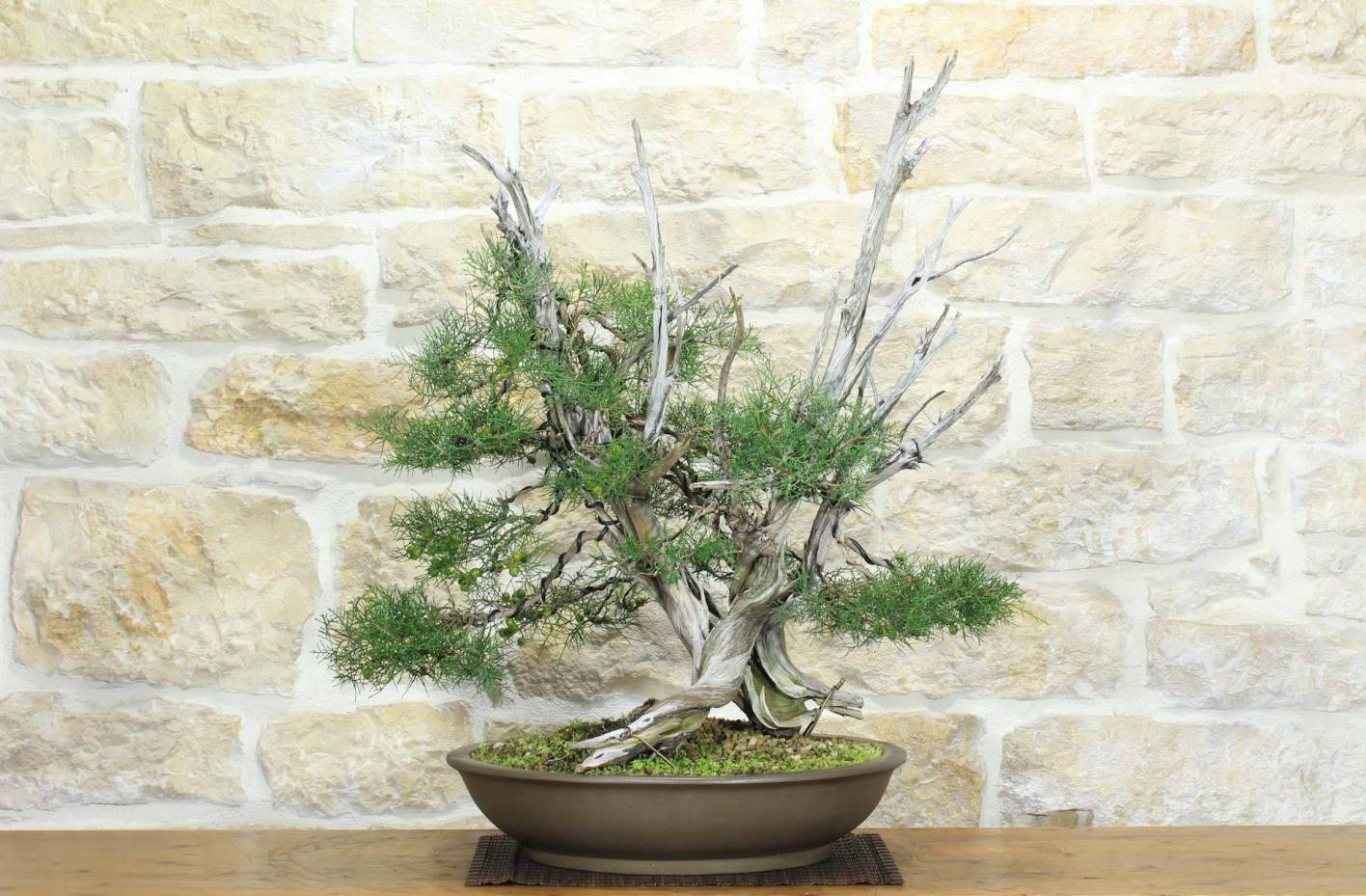
The Phoenicean Juniper (Juniperus phoenicea) is the species that tells the story of our coastlines. Unlike the Asian junipers, the Phoenicean has a wild, dramatic character all of its own: bark that flakes away in reddish strips, scale foliage (similar to cypress) of a warmer, olive green, and an incredible ability to create natural deadwood (*Sabamiki* and *Jin*) twisted by wind and salt. It is a bonsai for those who enjoy a challenge and a naturalistic aesthetic, a plant that demands absolute respect, especially at repotting time.

Origin & species

Native to the Mediterranean basin (from Spain to Turkey, taking in Sardinia where it reigns supreme), it grows on sand dunes and rocky cliffs. It is an evergreen conifer. In bonsai the subspecies *Turbinata* is also highly valued, with an even more compact habit and larger berries (cones).

Position and microclimate

The Phoenicean Juniper loves sun and heat.
Place it in full sun all year round. Direct light is essential to keep the scales tight and compact; in shade it becomes leggy and tends to produce prickly juvenile needles instead of adult scales.
It enjoys good ventilation and is unafraid of salty air. Compared with Japanese junipers, it tolerates scorching summer heat far better.

Watering

In the wild it is a xerophilous plant (a lover of dry ground), but in a pot it must not be neglected.
Water only when the soil mix is completely dry. The Phoenicean Juniper fears waterlogging more than anything else: its roots rot quickly if they stay wet for too long.
Mist the canopy often in summer: being a coastal plant, it absorbs a great deal of moisture from the night air.

Water quality

Extremely tough. It tolerates tap water even when hard, being used to growing on calcareous rocky substrates. It does not need acidic water.

Substrate

Drainage must be extreme. Use coarse materials.

  • Recommended mix: 60% pumice (or lapillus), 30% Kiryuzuna (or Akadama) and 10% general-purpose soil mix.
  • Pumice is excellent for this species. Avoid fine soil mixes that compact over time.

Repotting

This is the critical point. The Phoenicean Juniper hates repotting.
Repot rarely, every 4-6 years, and only if strictly necessary.
When: Late spring, once it is warm.
How: Never work the roots too much. Do not bare-root it and do not drastically reduce the root ball. Always leave a good portion of the old soil intact. If you get the repotting wrong or cut too much, the Phoenicean Juniper can die suddenly even months later.

Feeding

To keep the foliage compact and a deep, healthy green, specific fertilizers are needed.
The ideal choice is Joy Tamahi or similar slow-release organic fertilizers, applied in autumn and spring. Avoid excess chemical nitrogen, which would make the foliage explode into untidy shapes.

Flowering and fruiting

It produces berries (cones) that turn from green to dark brick-red as they ripen (unlike the common juniper, whose berries are blue). They are very decorative but use up energy: on trees still in training it is better to remove them.

Structural pruning

Carried out in winter.
The Phoenicean Juniper has a very visible live vein. When you cut thick branches or create deadwood (jin), take great care not to interrupt the flow of the live vein feeding the foliage above, or the whole branch will dry out. Natural jin are the strong point of this species.

Maintenance pruning

As with all scale junipers, do not use scissors to shorten the green tufts!
If you cut the scales, the tips turn brown and unsightly.
Use the pinching technique with your fingers: take hold of the tuft protruding from the outline and pull it away gently, breaking the shoot at the joint.

Wiring & bending

The wood is hard and stiff, far less flexible than that of the Japanese juniper.
Major bends must be done slowly, using raffia and guy wires, preferably in winter. Young branches wire well, but be careful not to damage the beautiful red bark.

Diseases and pests

  • Scale insect: It hides among the dense scale foliage.
  • Red spider mite: Common in hot, dry weather.
  • Root fungus (Phytophthora): Lethal, caused by excess water.

Winter & protection

In central and southern Italy and along the coast it lives outdoors all year round, perfectly happy.
In the north, take care: it is less frost-hardy than *Chinensis*. If temperatures stay below -2°/-3°C for long periods, move it into a cold greenhouse. It dislikes frost on the roots.

Year-round calendar

  • January-February: Deadwood work (jin liquid), cleaning.
  • March-April: Waking up, preventive treatments.
  • May: Repotting (only if essential), start of feeding.
  • June-July: Continuous pinching, full sun.
  • August: Rest, careful watering.
  • September-October: Autumn feeding (essential).
  • November-December: Protection from cold (in the north).

Useful products for this bonsai


Frequently asked questions about the Phoenicean Juniper

Can I collect it by the sea (yamadori)?
The Phoenicean Juniper is a protected species in many Italian regions (Sardinia, for example). Collecting is forbidden and severely punished. What is more, the survival rate of a wild-collected juniper is extremely low unless you are experienced. Buy nursery-grown plants: they are legal and have reliable roots.

Why has it produced prickly needles instead of soft scales?
It is stress. When a juniper is pruned too hard, badly repotted or kept in shade, it reverts to its juvenile state and produces prickly needles. To bring the scales back: sun, correct watering and fertilizer (Joy Tamahi), then wait a year or two without stressing it.

How do I treat the deadwood?
The wood of the Phoenicean Juniper is beautiful and extremely hard. Clean off the dead bark, let it dry in the sun and brush on neat jin liquid (taking care not to touch the soil or the roots). The liquid will bleach it and preserve it permanently.

404 Error

This page is no longer among our branches.

The page you are looking for may have been moved, removed, or is no longer available. But your next bonsai, accessory, or gardening item is still here waiting for you.

Explore the main categories or use the search below.
404

No problem: we will help you quickly find bonsai, pots, accessories, and useful content.

A reference point for bonsai and gardening lovers

Quickly find bonsai, gardening items, pots, accessories, and useful content to better take care of your plants.

Explore the catalog