Hackberry Bonsai: Full Guide, Care & "Stone Splitter"

HACKBERRY BONSAI

The Hackberry Bonsai: The "Stone Splitter" Giant

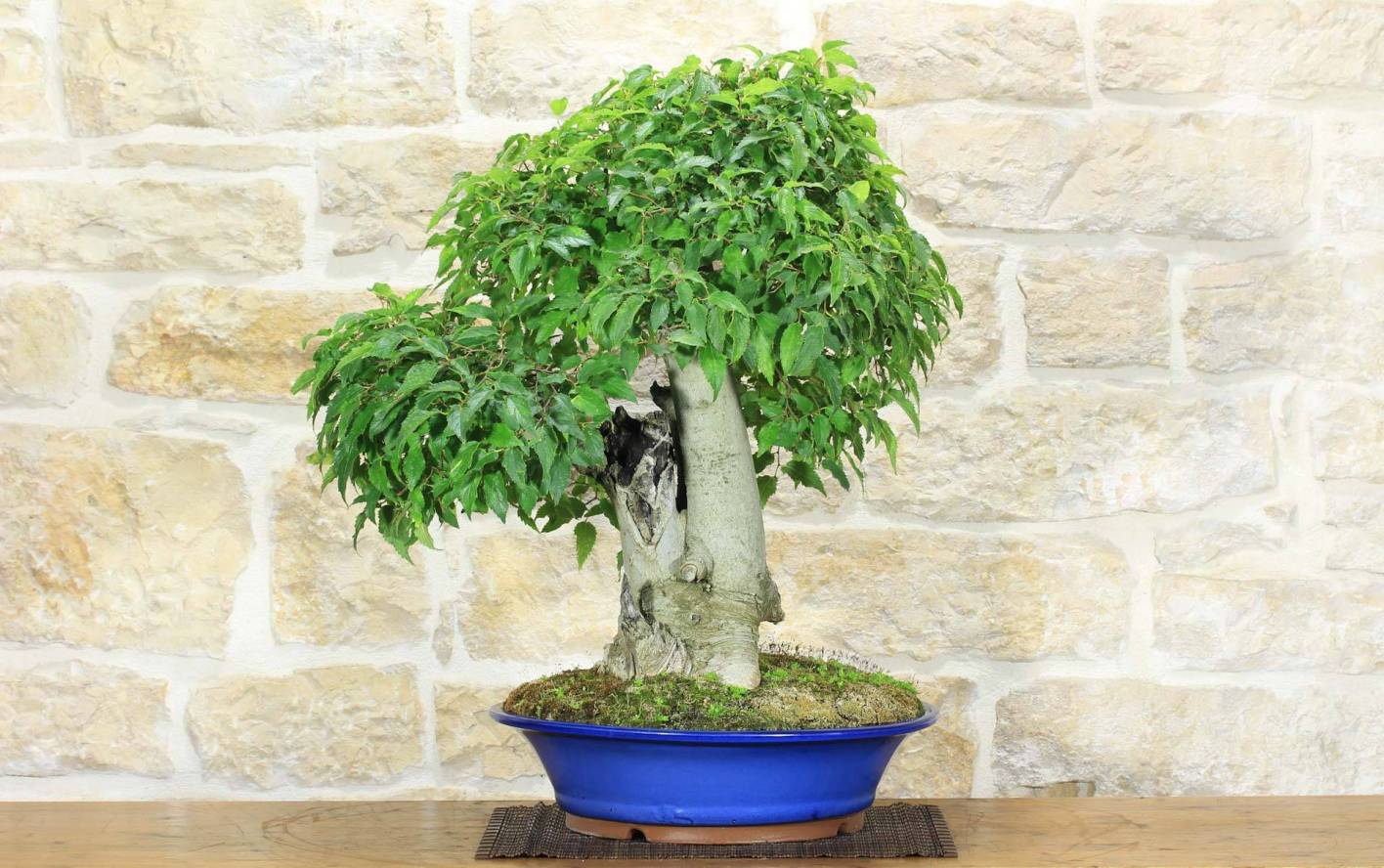
The Hackberry (Celtis australis) is the tree that embodies resilience. Commonly known as the "stone splitter" because of the strength of its roots, able to penetrate rocky ground and dry-stone walls, it is a bonsai that gives great satisfaction. It is valued for its smooth grey bark (similar to beech) which contrasts with the rough, toothed leaves of a fine bright green that turn golden yellow in autumn. Its fine branch structure and vigorous growth make it ideal for the broom style (Hokidachi) or informal upright.

Origin & species

Native to the Mediterranean basin and Asia Minor, it is a constant presence in our towns and hills. It belongs to the Cannabaceae family (formerly Ulmaceae).
In bonsai you often also find the Asian cousin, Celtis sinensis (Chinese hackberry), which is distinguished by smaller, glossier leaves that are less rough to the touch, and by an orange tinge on the new shoots. Care is very similar, but the sinensis is slightly less hardy in intense cold than the australis.

Position and microclimate

The hackberry is a sun-loving tree: it wants full sun.
Direct exposure is essential to reduce leaf size (naturally large) and to keep internodes short.
It stands up very well to heat and wind. Only in summer, if grown in very shallow pots, can it benefit from light afternoon shade to prevent the leaf tips from scorching, but it is far more resistant than maples or beeches.

Watering

In nature it withstands drought, but in a pot it is a heavy drinker.
During the growing season, water generously as soon as the soil mix dries on the surface. Never let it run short of water in summer if you want vigorous growth. All the same, avoid permanent waterlogging: those powerful roots need oxygen.

Water quality

It is an extremely tough plant.
It tolerates tap water, even hard water, without showing any sign of suffering. No special water is required.

Substrate

It adapts to anything, but a quality bonsai needs drainage.

  • Recommended mix: 50% pumice, 30% akadama and 20% general-purpose soil.
  • Pumice is excellent for reproducing the rocky, poor soils the hackberry prefers in nature.

Repotting

Carried out in spring (March-April), before the buds open.
The hackberry has very strong, thick roots that tend to lift the plant out of the pot. Repot young trees every 2-3 years.
Do not be afraid to prune the roots: it takes drastic reductions. Try to remove the thick taproots running straight down, to encourage the horizontal fibrous roots.

Fertilising

It is a vigorous plant that uses a lot of energy.
Feed from spring to autumn with solid organic fertilizer. In spring you can push with nitrogen if you need to build ramification. If instead the tree is finished, use more balanced fertilizers so the leaves do not grow too large.

Flowering and fruiting

The flowers are insignificant, but the fruits (drupes) are characteristic: small spheres that pass from green to yellow and then to blackish-purple when ripe in autumn. They are edible and slightly sweet (loved by birds), but on a bonsai they are often a secondary detail compared with the ramification.

Structural pruning

Done in late winter.
The wood is flexible when young but becomes hard over time. The hackberry tends to produce long, straight branches: you must step in decisively to create curves and movement. Large cuts heal well but slowly: always use cut paste to prevent the wood from shrinking back and forming hollows.

Maintenance pruning

The hallmark of the hackberry is the "zig-zag" growth of its branches.
During the season, shorten the branches always leaving the last bud facing the direction in which you want the branch to continue. This constant "cut and grow" builds the typical fine, angular ramification.

Pinching

On the soft shoots in spring, pinch out the central tip once they have made 3-4 leaves. This stops elongation and stimulates the back buds.

Wiring & bending

Young branches are very flexible and are easily wired in spring and summer.
Be careful: growth is fast and the wire quickly bites into the smooth bark, leaving ugly marks that take years to disappear. Check the wire every 3-4 weeks!

Diseases and pests

  • Aphids: Very frequent in spring on the new shoots.
  • Red spider mite: In summer, turns the leaves grey/bronzed.
  • Caterpillars: Sometimes eat the leaves in summer.

Winter & protection

Celtis australis is extremely hardy and does not fear frost. It can stay outdoors all year without particular protection, except in case of extreme frost for very small pots (shohin).
Celtis sinensis is slightly more sensitive: in northern Italy it is better to protect it in a cold greenhouse or under a shelter if temperatures drop well below zero.

Yearly calendar

  • January-February: Structural pruning, cleaning.
  • March: Repotting (heavy work on the roots).
  • April-May: Fertilising, pinching, watch for aphids.
  • June: Defoliation (excellent on this species), wiring.
  • July-August: Plenty of water, full sun.
  • September-October: Autumn feeding, fruit ripening.
  • November-December: Leaf fall (fine yellow colour), dormancy.

Useful products for this bonsai


Frequently asked questions about the hackberry

Why is it called the "stone splitter"?
Because in nature its root system is so powerful that it works its way into cracks in rocks and dry-stone walls, widening them as it grows until they split. In a pot, that strength means you will have to repot it often, because the roots will lift the plant up!

Can I defoliate the hackberry?
Yes, it is one of the species that responds best to total defoliation in June. If the tree is healthy, removing all the leaves will make it produce much smaller new ones and increase the fine ramification.

What is the difference between Celtis australis and sinensis?
The australis (our native) has larger, rough, matt leaves and grey bark. The sinensis (Asian) has smaller, smooth, glossy leaves, and the new shoots are often orange. The sinensis is aesthetically more refined, the australis more powerful and tough.

404 Error

This page is no longer among our branches.

The page you are looking for may have been moved, removed, or is no longer available. But your next bonsai, accessory, or gardening item is still here waiting for you.

Explore the main categories or use the search below.
404

No problem: we will help you quickly find bonsai, pots, accessories, and useful content.

A reference point for bonsai and gardening lovers

Quickly find bonsai, gardening items, pots, accessories, and useful content to better take care of your plants.

Explore the catalog