Home
- BONSAIaddremove
- BONSAI POTSaddremove
- RESIN VASESaddremove
- TROLLIES FOR POTaddremove
- TERRICCIaddremove
- PHYTOSANITARY PRODUCTSaddremove
- FERTILIZERSaddremove
- STORAGEaddremove
- OUTLET
- SEEDSaddremove
- GARDEN PONDSaddremove
- PLASTIC VASESaddremove
- BONSAI PILLSaddremove
- BOTANICAL TIPSaddremove


PALM MAPLE BONSAI
The Palmate Maple Bonsai: Japanese Elegance par excellence
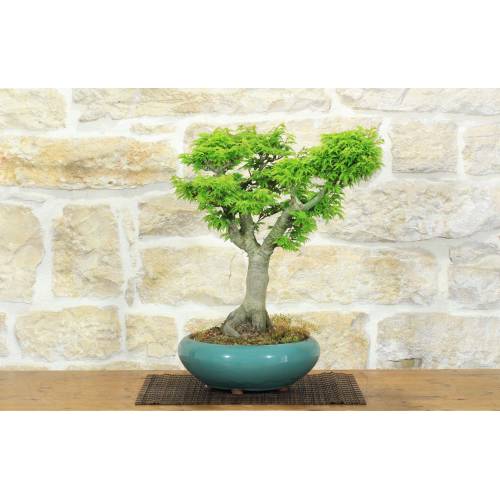
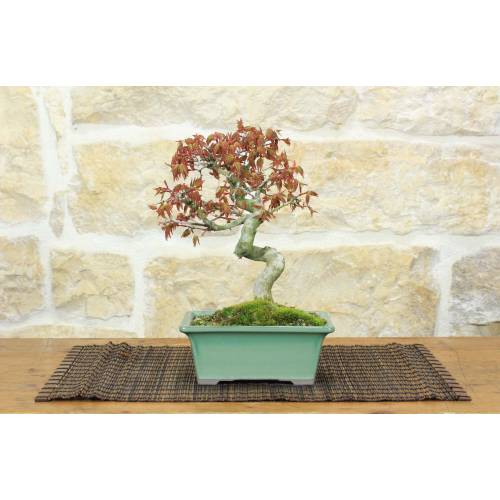
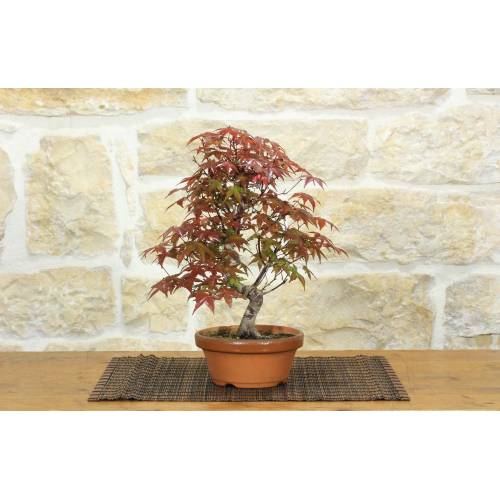
ThePalmate Maple(Acer palmatum) is probably the very image of bonsai in the collective imagination. Beloved for its refined elegance, delicate five- or seven-lobed leaves, and, above all, for its incredible ability to scan time: colorful buds in spring, fresh green in summer, a triumph of reds and oranges in autumn, and fine bare branching in winter. It is a plant that requires sensitivity: it is not as "rustic" as an elm, but with the right attention it gives unparalleled satisfaction.
Origin & species
Native to Japan, Korea and China, the Palmate Maple has hundreds of cultivars selected over the centuries (such as the famous blood-red Deshojo, the dwarf Kiyohime or the wrinkled-barkArakawa ). In bonsai, it is prized for its ability to create light leaf stages and for the beauty of its bark, which must remain clean and intact. It is a deciduous tree that fears climatic extremes.
Exposure and Microclimate
This is the crucial point. The Maple tree has thin leaves that dehydrate easily.
Spring and Fall: Full sun to stimulate bright colors and short internodes.
Summer: Absolute protection. From June to September, during midday and afternoon hours, it should be inshade or under a shade net (at 40-50%). Dry wind is its worst enemy: it burns the leaf tips in a few hours ("dry blast").
Watering
The soil should always remain slightly cool, never soggy but also not as dry as dust. In summer, Maple trees drink a lot because of the large leaf area. Check the soil every day: if the surface is dry, give water. Steaming the foliage in the evening (not in the sun!) helps maintain the ambient moisture it loves.
Water quality
The Palmate Maple is slightly acidophilic and hates limestone. Hard tap water, in the long run, blocks iron absorption, leading to yellow leaves with green veins (ferric chlorosis) and burnt tips.
Ideally, use rainwater or water left to decant. If you use tap water, give chelated iron occasionally.
Substrate
Maple's fine roots need oxygen and slightly acidic pH.
- Optimal mix (North/Warm): 70% Akadama (which is neutral/slightly acidic) and 30% Kanuma (specifically for acidophilic, retains moisture).
- Optimal mix (South/Warm): 50% Akadama, 30% Pumice, and 20% Leaf Potting Soil or quality composted bark to retain the moisture needed to keep it from "baking" in summer.
Repotting
It is done every 1-2 years on young specimens, every 3-4 on mature ones, strictly at the end of winter (February-March), as soon as the buds swell but before the leaves open.
Maple trees produce many roots: when repotting, you should carefully untangle them, remove the large, woody ones and shorten the fine capillary to maintain a compact, low root ball.
Fertilization
Watch out for nitrogen. If you push too hard, you will have huge leaves and long internodes, ruining aesthetics.
Use a balanced organic fertilizer in spring. In the fall, switch to a "zero nitrogen" or low nitrogen (PK) fertilizer to harden the wood and promote red leaf coloration. Suspend totally in July and August.
Flowering and fruiting
Produces small reddish flowers followed by the typical "samare" (seeds with wings) in pairs. Although pretty, in bonsai they are often removed immediately so as not to take energy away from the plant, unless seed is to be obtained.
Structure pruning
Major cuts are made in winter when the plant is bare. Maple has a strong lymph flow and heals slowly creating large calluses. It is mandatory to use mastic on the cuts, otherwise the branch will retract and the wound may become infected. Use the spherical cutter to lightly dig the cut and allow the bark to cover it perfectly over time.
Maintenance Pruning and Stapling
During the growing season, in order to maintain form, topping the elongating shoots leaving 1 or 2 pairs of leaves.
Stapling the central shoot as soon as it opens is essential to prevent the internodes from becoming too long.
Binding & folding
Maple bark is as thin and delicate as human skin. Wire can be put on, but it must be checked almost weekly in spring because it marks the branch in a moment. Many experienced bonsai growers prefer to train the Maple tree only by pruning ("clip and grow" technique) or by using ties, to avoid wire scars.
Diseases and pests
It is a susceptible plant.
- Aphids: Ever-present in spring on new shoots.
- Powdery mildew (White Mal): White patina on leaves, frequent if there is stagnant moisture and little air.
- Red spider mite: In summer if the air is too dry.
- Verticilliosis: A serious vascular fungus that suddenly dries up entire branches. It is prevented with clean soil and sterilized tools.
Winter & protections
Resists cold well, but potted roots fear prolonged frosts. If the temperature drops below -3°/-4°C for days, protect the pot with TNT or put it in a cold greenhouse. Beware of late April frosts, which can burn newly hatched leaves.
Annual calendar
- January-February: Structure pruning, winter oil application.
- March: Repotting, start light fertilization.
- April-May: Shoot stapling, aphid control, full sun (if not too hot).
- June: Defoliation (only on healthy, experienced plants), beginning shade.
- July-August: Shade, water, rest. No fertilizer.
- September-October: Fall fertilization, sun exposure for color.
- November-December: Leaf fall, cleaning, winter protection.
Useful products for this bonsai
- Kanuma (Acidic substrate specifically for Maple trees)
- Healing mastic for broadleaf trees (Indispensable)
- Liquid Fertilizer (For rapid and controlled absorption)
- Precision Tweezers (For cleaning and stapling)
- Coppered aluminum wire (Gentle on bark)
- Basic tool kit (For a good start)
Frequently Asked Questions about the Palmate Maple
Why do the leaf tips dry out in the summer?
It's the classic "blow dry." It happens if there is too much wind, too much direct sun during hot hours, or if water in the soil is lacking for even a few hours. The Maple tree does not tolerate dry air: protect it from the wind.
Why did my Red Maple turn green?
Many red varieties (such as Deshojo) are red only in spring. In summer they turn green/bronze to do photosynthesis, then turn red again in fall. If, on the other hand, it stays green all the time, it could be a variety that is not red or receives too little sun (the sun "activates" the color).
When can I defoliate the Maple tree?
Total defoliation is done in June, but it is a stressful technique. Do it only if the tree is in perfect health, well fertilized and if you want to shrink the leaves. Never do it in the year of repotting.
What do I do if I see a white patina on the leaves?
It's powdery mildew (White Mal). Treat immediately with a specific sulfur-based product or powdery mildew fungicide and move the plant to a more ventilated (but not windy) and sunny (morning) area.
There are 14 products.