
Carob Bonsai: Growing Guide to a Mediterranean Tree

CAROB BONSAI

The Carob Bonsai: The Living Sculpture of the Mediterranean

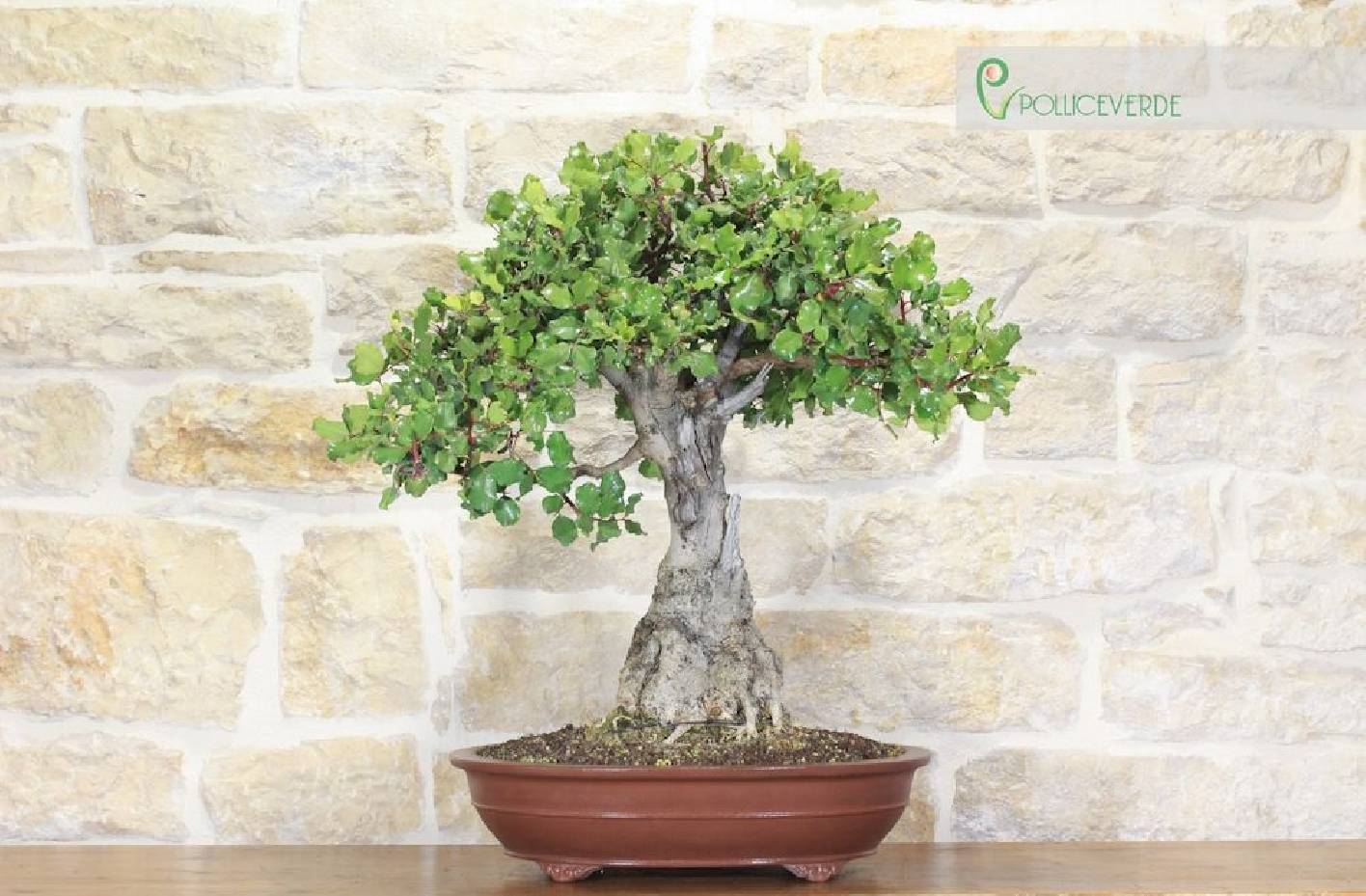
The Carob (Ceratonia siliqua) is not a tree for those in a hurry, but a companion for life. A symbol of the landscape of southern Italy and of coastal areas, it is an extraordinary evergreen species for bonsai thanks to its compound leaves, dark green, glossy and leathery, and to its trunk which, as it ages, becomes gnarled and rich in natural deadwood. It is a rugged plant, used to surviving in extreme conditions among sun-baked rocks, which makes it robust but demanding on one point: drainage.

Origin & species

Native to the Mediterranean basin and the Middle East, it belongs to the Fabaceae family (legumes). It is a dioecious species, meaning there are male trees and female trees: only the latter produce the fruit (the carob pods) if pollinated. Its wood is extremely hard, almost like stone, which makes it perfect for creating jin and shari (deadwood) that last over time without rotting easily.

Exposure and microclimate

The carob is a child of the sun.
It must stand in full sun all year round. Only in this way does it reduce leaf size and keep short internodes.
It loves heat and air movement. Unlike other species, it does not suffer from salty sea air, so it is perfect if you live near the coast. In northern Italy, in summer, give it the hottest and sunniest position you have.

Watering

Although in nature it is drought resistant, in a pot things change. Water when the soil mix is dry, but without overdoing it.
The carob's number one enemy is root rot. If the soil stays soaked for too long, the roots die quickly. In summer it drinks a lot, but always make sure the water drains away quickly through the drainage holes.

Water quality

It is an undemanding plant. Being typical of limestone soils, it tolerates hard tap water far better than maples or azaleas. Obviously, water that has been left to stand, or rainwater, is always preferable to avoid excessive salt build-up in the long run.

Substrate

There is no room for compromise here: perfect drainage is essential. The carob suffers terribly from "wet feet".

  • Recommended mix: 50% pumice (essential for aeration), 30% akadama and 20% lava rock or fine gravel.
  • If you live in a scorching area, you can add a pinch of general purpose soil or humus (10-15% at most) so you don't have to water every 3 hours, but the base must be inert and granular.

Repotting

This is the most delicate moment. Carob roots are sensitive to trauma.
When: late spring (May), when temperatures are steadily high. Never repot in winter.
How: never bare-root the plant completely (always leave part of the old root ball near the trunk) and do not prune the root system drastically. Use roomy pots: the carob likes to have space for its deep roots.

Fertilizing

Feed with slow-release organic fertilizer from March to June and from September to November. Being a legume, it can fix atmospheric nitrogen thanks to symbiotic bacteria in its roots, so do not overdo it with high-nitrogen fertilizers, which would only make the leaves grow excessively long.

Flowering and fruiting

In a pot it is rare and requires mature plants (often over 20 years old) and the presence of specimens of the opposite sex nearby. The flowers appear in late summer/autumn, directly on the old wood (cauliflory). The pods take a whole year to ripen. Enjoy the beauty of the foliage and the bark rather than the fruit.

Structural pruning

The wood is extremely hard. Large cuts should be made in late winter. Use well-sharpened, disinfected tools. If you create deadwood (jin), bear in mind that on the carob it is very attractive and natural-looking, recalling centuries-old olive trees.

Maintenance pruning

The carob has very strong apical dominance: it tends to shoot out long branches upwards.
Pinch the new shoots throughout the growing season when they have produced 4-5 leaves, shortening them back to 2. This serves to thicken the foliage pads, otherwise you will end up with long, bare branches with leaves only at the tips.

Wiring & bending

The branches become stiff very early and snap if forced.
Wiring should be done on young shoots, still green or semi-lignified. For large branches, forget the wire: use guy wires (lines anchored to the pot or to other branches) to lower them gradually. If you do use wire, check it often, because vigorous growth can make it cut into the bark.

Diseases and pests

It is as tough as a rock, but watch out for:

  • Scale insect: it attaches itself under the leathery leaves or on the branches.
  • Powdery mildew: rare, but possible in damp, poorly ventilated spots.
  • Root fungi: if you overdo the watering. Prevent them with copper-based products or trichoderma in the soil.

Winter & protection

It is not an alpine tree. It withstands brief light frosts (-1°/-2°C) if the soil is dry, but if you live in the north or inland, from November to March it should be sheltered in a cold greenhouse (ideal temperature between 2°C and 10°C). In the south it can stay outside all year round, preferably sheltered from cold northerly winds.

Yearly calendar

  • January-February: protection from the cold, deadwood work.
  • March-April: resumption of growth, start of fertilizing.
  • May: repotting (optimal period), selective pruning.
  • June-August: continuous pinching, careful watering, full sun.
  • September-October: autumn fertilizing (phosphorus and potassium).
  • November-December: winter shelter (in the north), clean-up.

Useful products for this bonsai


Frequently asked questions about the carob

Can I grow a bonsai from a carob seed?
Yes, they germinate easily, but growth is very slow. It will take years before you have a trunk you can work on. It is an excellent exercise in patience, but if you want aesthetic results within a human timescale, it is better to start from nursery material or pre-bonsai.

Why are the leaves closed or folded downwards?
The carob sometimes "closes" its leaves to reduce transpiration if it is too thirsty or too hot, or at night (nyctinastic movement). If, however, they stay closed and limp even during the day with moist soil, there is a problem at the roots.

Can the carob be defoliated?
Yes, a partial defoliation can be carried out in June on very strong plants to reduce leaf size, but it is a stressful practice. Often consistent pinching and plenty of sun are enough to obtain small leaves without taking risks.

How do I treat the deadwood (jin)?
Carob wood is magnificent for this. Once the dead branch has been stripped of its bark, let it dry and apply jin liquid (lime sulphur) to bleach it and protect it from fungi. It should be reapplied once or twice a year.

404 Error

This page is no longer among our branches.

The page you are looking for may have been moved, removed, or is no longer available. But your next bonsai, accessory, or gardening item is still here waiting for you.

Explore the main categories or use the search below.
404

No problem: we will help you quickly find bonsai, pots, accessories, and useful content.

A reference point for bonsai and gardening lovers

Quickly find bonsai, gardening items, pots, accessories, and useful content to better take care of your plants.

Explore the catalog