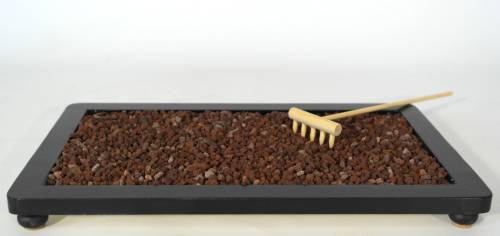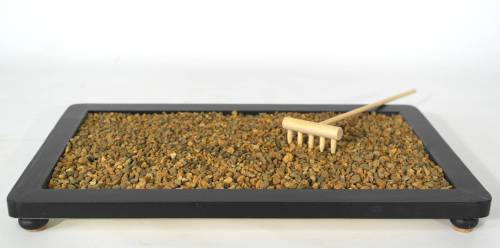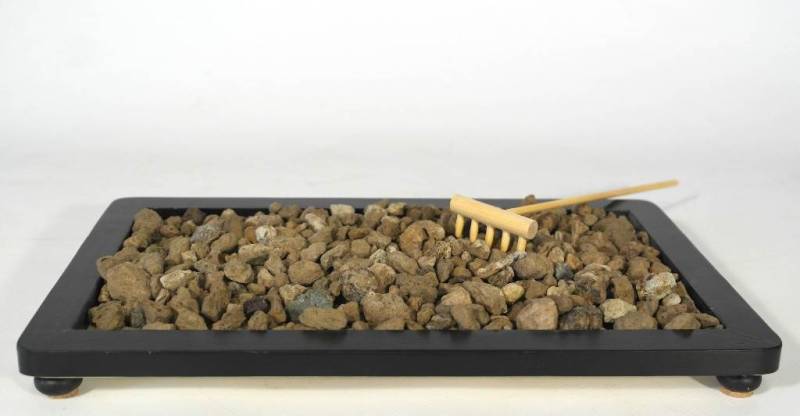


Pumice 7/12 mm - 10 litre pack


We pack the bonsai in order to guarantee the life of the plant

Discover Our Guarantee Up To 2500 €

Active Every Day From 09:00 - 18:00
What it is and where it comes from
Pumice is a light, porous volcanic rock of natural origin. It does not decompose and releases no nutrients: it is a pure inert material, and that is exactly why it has been used in bonsai cultivation for decades. This is 7/12 mm grain, therefore a coarse grade, in a 10 litre pack.
How it behaves in the pot
It drains. With granules between 7 and 12 mm, water passes through the substrate without lingering, while the internal porosity of each granule holds a reserve of moisture that the roots can draw on when needed. It is this balance that makes it useful even in pots exposed to rain or generous watering.
Between one granule and the next there are wide empty spaces filled with air: fine feeder roots run into them and branch out instead of circling aimlessly. Over the long term, the real advantage is mechanical stability. Pumice does not break down, does not pack together and does not turn into compacted mud between one repotting and the next, so the substrate stays open throughout the growing cycle instead of closing up after the second summer.
Features
- Material: pumice, natural inert of volcanic origin
- Grain size: 7/12 mm
- Pack capacity: 10 litres
- Use: draining component for bonsai substrates or as a stand-alone substrate
Which grain and for which plants
7/12 mm is a coarse grade. It suits medium and large specimens in deep pots, where a fine grain would compact; on shohin and small pots it is out of proportion with the volume available. The most common use of this grade is as a drainage layer at the bottom of the pot, over the mesh covering the holes.
Mixed into the body of the substrate, it lightens the components that hold a lot of water and pairs well with akadama. It works on conifers, on pines, on all species that suffer from waterlogging. It can also be used on its own: this often happens in the early establishment phase, on freshly collected material or on plants with a compromised root system.
How to use it at repotting
Before using it, sieve it to remove dust and fine flakes produced during transport: these are what settle at the bottom and block the drainage. A quick rinse is enough. Lay a layer of this grade at the bottom of the pot, over the mesh, then continue with your chosen mix.
Work it in among the roots with a chopstick, without forcing, until no empty air pockets remain. After repotting, water thoroughly until clean water runs out of the drainage holes: dry pumice is very light and the first watering also helps it settle.
Frequently asked questions
Is 7/12 mm pumice suitable for a bonsai in a small pot?
Better not. In shallow, low-volume pots a 7 to 12 mm granule takes up too much space and leaves excessive gaps in relation to the root mass. This grade performs best on medium and large plants, or as a drainage layer at the bottom.
Does pumice feed the plant?
No, it is inert: it provides no nutrients. Its role is to give structure, air and drainage to the substrate. Nutrition must be managed through fertilising, which also applies when pumice is used as the only component, as happens during establishment phases.
Does it break down over time like akadama?
No. Pumice granules last for years between one repotting and the next without crumbling and without turning into suffocating clay. That is the main reason many growers include it in their mixes: it keeps the structure open even when the softer components begin to break down.
What is included
- Natural pumice, 7/12 mm grain size
- 10 litre pack
If you prefer to measure out the components yourself, you can put together your own mix on the custom soil mix page.
- Days of preparation
- 2
| EXPRESS COURIER | EU-ZONE |
| 0 a 100 Kg. | from 0.35 until 5 € for Kg + Additional fix cost (depending to your EU-ZONE) |
| 100 Kg > + | CONTACT US FOR PRICE |
- Add to cart the product.
- Go to Cart
- In the bottom of page "Estimate shipping" and put your country, then the website will give you a