


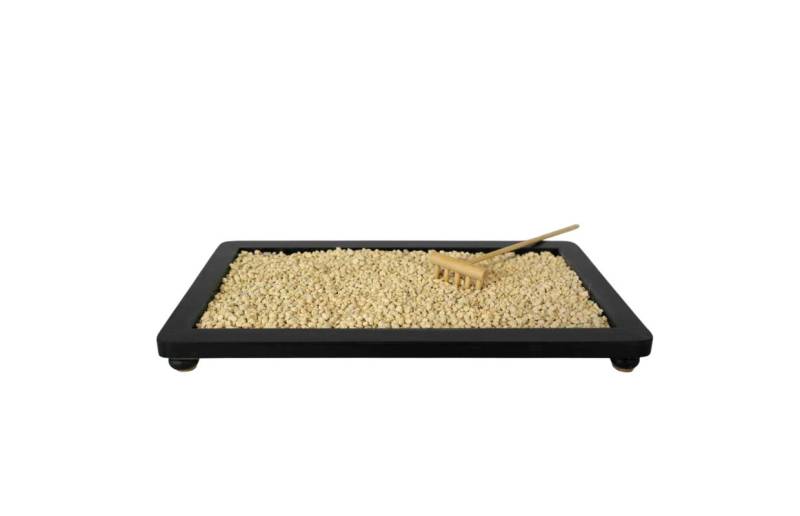

Kanuma acidic bonsai soil - 5/10 mm grain - 2 litre pack


We pack the bonsai in order to guarantee the life of the plant

Discover Our Guarantee Up To 2500 €

Active Every Day From 09:00 - 18:00
What it is and where it comes from
Kanuma is a Japanese clay soil with a low pH, quarried and graded into granules. It is easy to recognise: pale, almost ivory in colour, with a light, porous grain. This pack holds 2 litres with a 5/10 mm grain size.
How it behaves in the pot
The granule absorbs more water than akadama while still letting the surplus run away through the drainage hole. This twofold behaviour is why acid-loving plants do so well in it: the roots find steady moisture without sitting in a closed, airless substrate.
It is a soft material. Within a few seasons the grain tends to soften and compact, especially in climates with repeated frosts, so it is worth checking at repotting time. For this very reason we suggest mixing kanuma with other soils, which give it structure and keep it open for longer.
Features
- Japanese clay soil with an acidic reaction (low pH)
- Grain size 5/10 mm
- 2 litre pack
- Free draining, with water absorption higher than akadama
- Suited to acid-loving plants
Which grain and for which plants
5/10 mm is a coarse grain. It is at home in deeper pots and on medium to large specimens, where volume and air are needed; on shohin and shallow pots it is out of proportion with the root mass. The 2 litre pack is a modest quantity, enough for a single repotting or to build the drainage layer at the bottom of a few pots.
Kanuma soil is the classic choice for satsuki azaleas, camellias, rhododendrons and generally for species that struggle in alkaline substrates. It can be used on its own or alongside materials that stay stable over time, such as pumice or volcanic lapillus.
How to use it when repotting
First of all, sieve it. Even with a 5/10 mm grain there is always some dust from transport and, if it ends up in the pot, it clogs the gaps and slows down drainage. One pass through a sieve is enough.
Lay a drainage layer on the bottom, settle the plant in place and fill from the edges towards the centre, working the granules between the roots with a chopstick without pressing: kanuma is friable and a crushed granule will not recover. Once repotting is done, water generously until the water running from the hole is clear.
Frequently asked questions
Can kanuma be used on its own?
It can, and it is common practice with azaleas. We do, however, recommend mixing it with other soils: being a soft material, on its own it tends to compact sooner, whereas adding a harder component keeps the substrate open from one repotting to the next.
How does it differ from akadama?
Akadama is a general-purpose soil, while kanuma has a low pH and is intended for acid-loving plants. In terms of water, kanuma absorbs more than akadama while still draining freely, and it is also recognisable at a glance by its pale colour.
How much kanuma do I need, and is the 5/10 mm grain right for azaleas in small pots?
The 2 litre pack covers a single repotting; bear in mind that 1 litre of granules fills a volume roughly equal to a 10 cm cube. As for the grain, better not in small pots: on shallow containers and small plants this calibre leaves gaps that are too wide between the azalea's fine roots. At those sizes a finer grain works better, while 5/10 mm comes into its own on large specimens and as a drainage layer at the bottom.
What is included
- Japanese kanuma, 5/10 mm grain
- 2 litre pack
If you prefer to measure out the components yourself, you can put together your own mix on the made-to-measure soil page.
- Days of preparation
- 2
| EXPRESS COURIER | EU-ZONE |
| 0 a 100 Kg. | from 0.35 until 5 € for Kg + Additional fix cost (depending to your EU-ZONE) |
| 100 Kg > + | CONTACT US FOR PRICE |
- Add to cart the product.
- Go to Cart
- In the bottom of page "Estimate shipping" and put your country, then the website will give you a


feedback Report comment