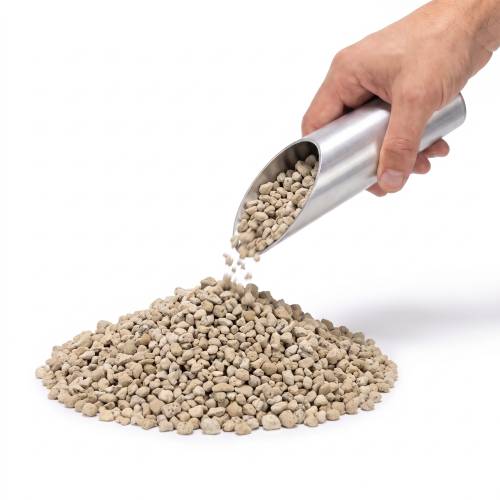


Pumice 2/4 mm - 10 litre pack


We pack the bonsai in order to guarantee the life of the plant

Discover Our Guarantee Up To 2500 €

Active Every Day From 09:00 - 18:00
What it is and where it comes from
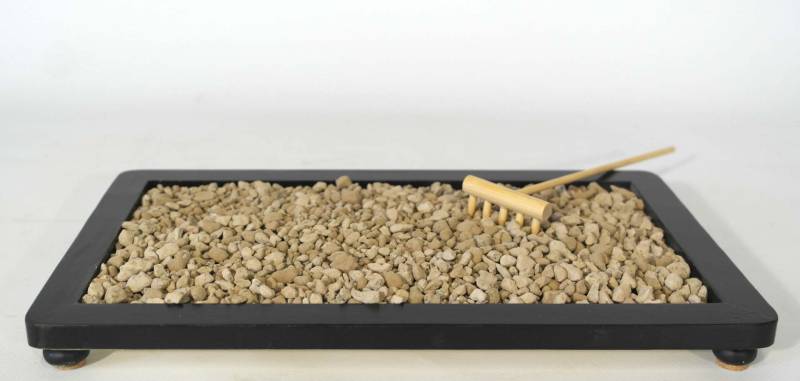
Pumice is a light, highly porous volcanic rock quarried from effusive deposits. Here it comes sieved to a 2/4 mm grain and packed in a 10 litre tub. It is an inert material: it supplies no nutrients, it works on the structure of the substrate.
How it behaves in the pot
Water passes through at once. What is left behind is held inside the pores of each grain, not by a compact mass: the result is a substrate that stays moist but never waterlogged, with air still circulating between the particles. Roots respond well to this, producing dense feeder roots instead of a few thick ones.
The grain holds up. It does not pack down or turn to mud with frost or repeated watering, which is why many growers keep it in their mix even where akadama on its own would not reach the next repotting in good shape.
Specifications
- Material: pumice, natural inert of volcanic origin
- Grain size: 2/4 mm
- Pack capacity: 10 litres
- Use: substrate component for bonsai
Which grain for which plants
The 2/4 mm size suits small and medium pots: shohin, trees in training, shallow bowls where a coarser grain would leave too many voids. It works well as the main body of the substrate for a medium-sized specimen, while in deep pots and with large trees it is better kept for the central body, using a coarser grain at the bottom.
It suits everything. Conifers, broadleaves, fruiting species: being neutral, it does not condition the substrate the way kanuma does with acid-loving plants, or peat. It pairs with akadama and lava, or can be used on its own, a frequent choice during the first rooting phase of cuttings, recovered plants and material being repotted after hard root pruning.
How to use it when repotting
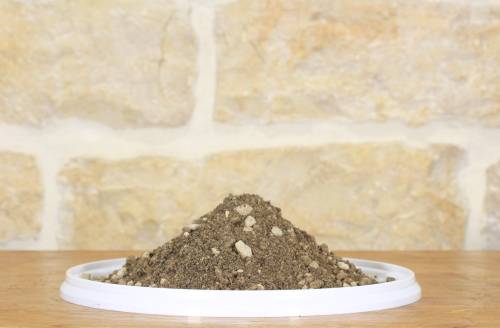
The sieve comes first: even well-graded pumice carries crushing dust, and that dust has to go, otherwise it settles at the bottom and blocks the drainage pores. Anyone looking for "pumice sand" is after the fine grade, which this is not: 2/4 mm remains a granulate.
Lay a layer on the bottom of the pot, then fill, working the material in among the roots with a chopstick, without pressing it down. After repotting, water thoroughly until it runs clear from the drainage holes.
Frequently asked questions
Can bonsai pumice be used on its own?
Yes, and it is not a stretch. As the sole component of the substrate it is used above all during the rooting phase, when you need a free-draining, well-oxygenated environment that pushes root development. On established trees it is generally preferred in combination with a component that holds more water.
Does the 2/4 mm grain break down over time?
No. Pumice is a stable inert: it does not disintegrate with watering or through freeze-thaw cycles, and keeps the same structure throughout the period between two repottings. It is precisely this durability that makes it useful in mixes with more perishable clay-based materials.
How much does 10 litres cover?
It depends on the volume of the pots, but 10 litres is enough to repot several small and medium plants, or one specimen in a large pot. We suggest always keeping some in reserve: it is also handy for drainage layers and adjustments as you go.
What is included
- Natural pumice, 2/4 mm grain size
- 10 litre pack
If you prefer to measure out the components yourself, you can build your own mix on the custom soil mix page.
- Days of preparation
- 2
| EXPRESS COURIER | EU-ZONE |
| 0 a 100 Kg. | from 0.35 until 5 € for Kg + Additional fix cost (depending to your EU-ZONE) |
| 100 Kg > + | CONTACT US FOR PRICE |
- Add to cart the product.
- Go to Cart
- In the bottom of page "Estimate shipping" and put your country, then the website will give you a