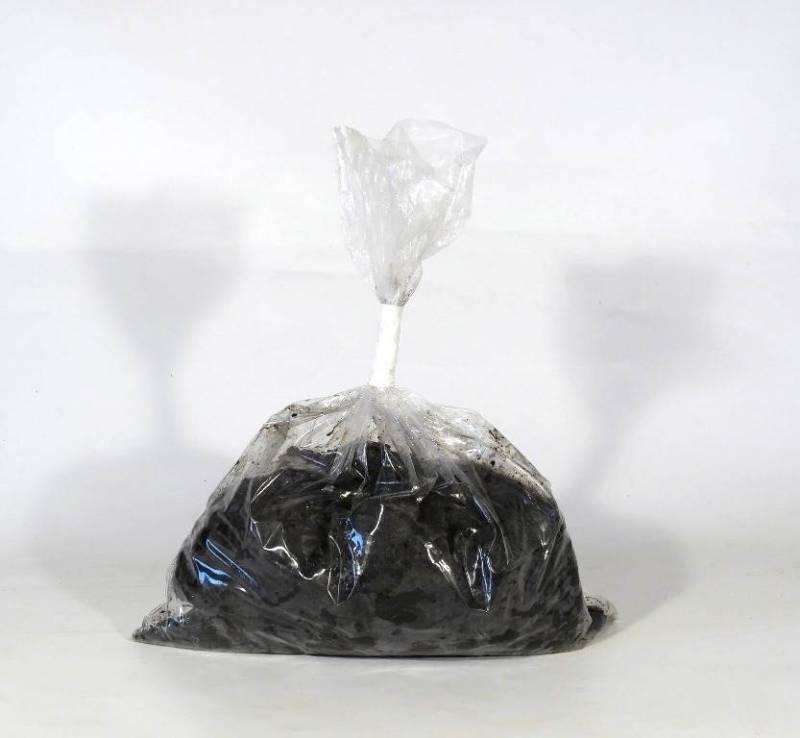


Keto Tsuchi soil 10 lt - (approx. 8 kg)


We pack the bonsai in order to guarantee the life of the plant

Discover Our Guarantee Up To 2500 €

Active Every Day From 09:00 - 18:00
What it is and where it comes from
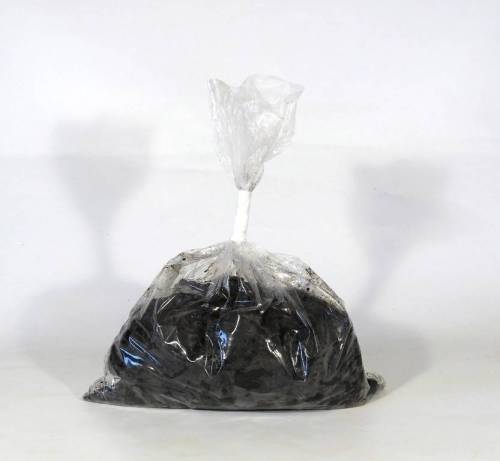
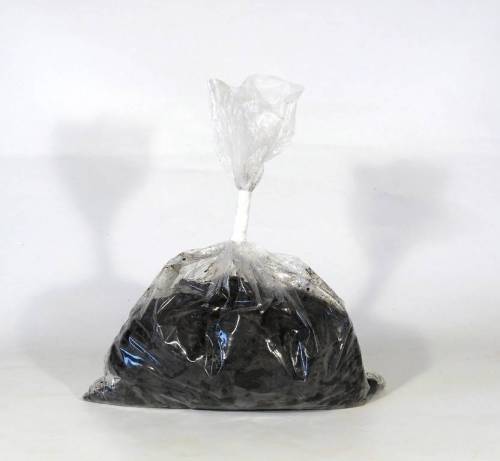
Keto Tsuchi is an organic peat-bog clay, dark in colour and doughy in texture. It comes from Japan, where it has always been used in rock and slab plantings. It is not a granulate: it is a compact mass worked by hand.
How it behaves in the pot
It is sticky. That is the whole point: it clings to rock, slab and roots, and stays where you put it even when the plant sits outside a pot. It holds plenty of water and releases it slowly, a quality that matters when the root ball is exposed on the flank of a stone or along the edge of a slab, where sun and wind dry things out quickly.
On the other hand it is a dense material, with little air inside. That is why it is not used as the substrate in an ordinary pot, and why it is lightened: mixed with fine akadama the mass stays malleable but opens up, and roots run through it far better. Over the months the surface tends to harden, forming a crust that holds the shape you gave it.
Features
- Japanese organic clay for rock and slab plantings
- 10 litre pack
- Weight approx. 8 kg, varying with the moisture content of the material
- Made in Japan
Which grade and for which plants
Here it is not a question of particle size but of plasticity. Keto soil is used for ishizuki, bonsai grown on rock, for forest plantings on slabs and to hold the substrate wherever there is no pot wall to contain it.
It works with every species suited to these compositions: maples, elms, hornbeams and conifers in forest plantings, ficus and pines in rock plantings. On kusamono and small grass arrangements it is the material that holds the root ball together.
How to use it when repotting
Knead it before use. If it feels stiff, simply add a little water and work it until malleable; fine akadama blended into the mix improves the structure and reduces the risk of suffocating the roots. Then spread it over the rock or around the perimeter of the slab, forming the rim that will contain the growing medium.
The roots are laid on top and covered with the substrate proper, settling it in with a chopstick. Water with a fine spray, never a direct jet: a strong flow washes away the still-fresh clay. For the first few weeks it is worth protecting the planting from heavy rain, until the surface has settled. It is often covered entirely with moss, which protects it and keeps it damp.
Frequently asked questions
Can Keto Tsuchi be used on its own as a growing medium?
No, not as a growing substrate in a pot: it holds too much water and leaves the roots too little air. Its role is structural, to shape and hold soil on rock and slab. We recommend mixing it with fine akadama, which improves its structure.
Why is the weight given as approximately 8 kg rather than exact?
Because it is a moist organic clay. Its water content varies from batch to batch and with storage conditions, so the same 10 litre volume may weigh slightly more or slightly less. The reliable reference figure remains the capacity in litres.
How should an opened pack be stored?
Close the bag tightly and keep it from drying out. If it hardens it is not lost: break it up, wet it and knead it back to working consistency. Keep it away from frost and direct sun, in a cool place.
What is included
- 1 pack of Keto Tsuchi, 10 litres
- Weight approx. 8 kg, varying with moisture
- Made in Japan
If you prefer to measure out the components yourself, you can put together your own blend on the made-to-measure soil page.
- Days of preparation
- 2
| EXPRESS COURIER | EU-ZONE |
| 0 a 100 Kg. | from 0.35 until 5 € for Kg + Additional fix cost (depending to your EU-ZONE) |
| 100 Kg > + | CONTACT US FOR PRICE |
- Add to cart the product.
- Go to Cart
- In the bottom of page "Estimate shipping" and put your country, then the website will give you a