


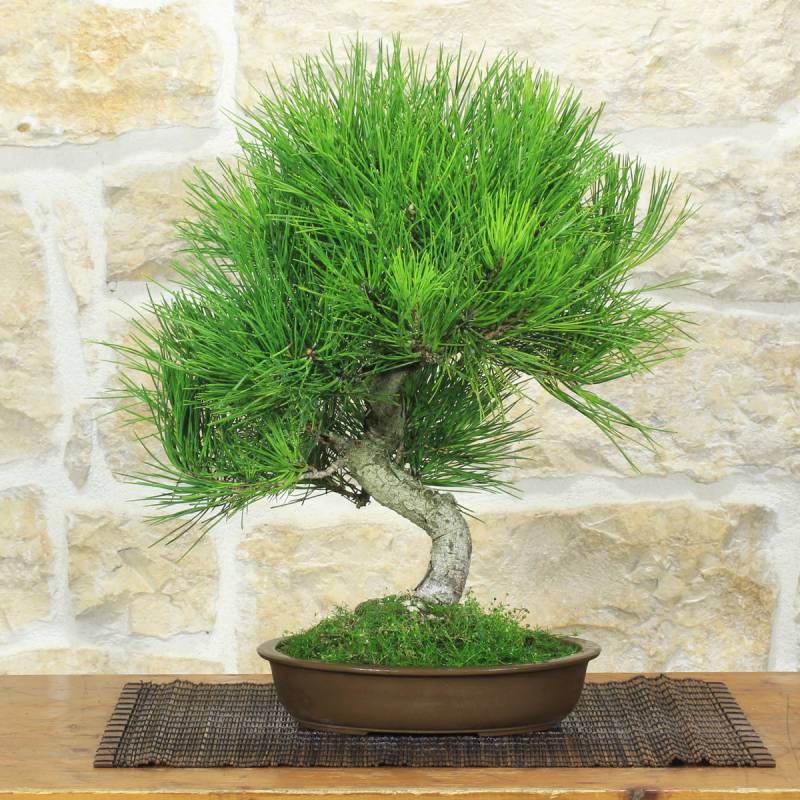


Bonsai of Black Pine Thunbergii (88)
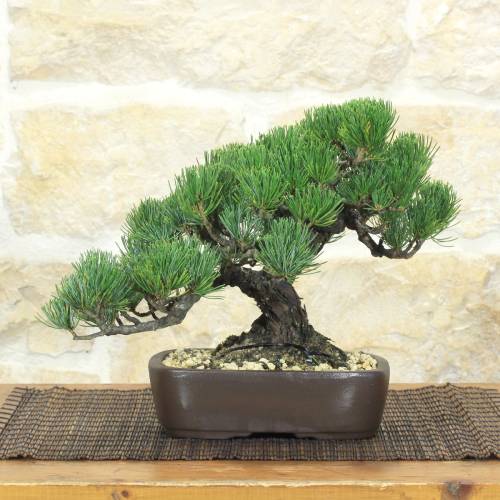
Pinus thunbergii bonsai, Moyogi style, 18-20 year old specimen with sinuous trunk and vigorous needles, in an oval brown stoneware pot. Unique piece.


We pack the bonsai in order to guarantee the life of the plant

Discover Our Guarantee Up To 2500 €

Active Every Day From 09:00 - 18:00
Presentation
The Pinus thunbergii, the Japanese Black Pine, is one of those species that needs no introduction in the bonsai world. Native to the coasts of Japan and Korea, it carries the image of windswept cliffs and ancient Zen gardens. This 18-20 year old specimen already shows a well-defined character: the trunk moves with a natural sinuosity in the moyogi style, the needles are long and full of vigor, and the bark is beginning to reveal that rugged texture that makes pines so fascinating as the years go by.
Technical characteristics
- Botanical species: Pinus thunbergii (Japanese Black Pine)
- Estimated age: 18-20 years
- Bonsai style: Moyogi (informal upright)
- Pot: Oval brown ceramic
- Exposure: Full sun, outdoors all year round
- Care difficulty: Intermediate-advanced
How to care for it
Position: The Japanese Black Pine is an outdoor plant in every respect. It needs full sun — the more light it receives, the shorter and more compact the needles remain. Avoid shaded or sheltered positions that would cause the vegetation to stretch unnecessarily. In winter it tolerates cold well, but in areas with particularly intense frosts, it is advisable to protect the pot with non-woven fabric to safeguard the roots.
Watering: The substrate should be allowed to dry slightly between waterings. Black pine does not like stagnant water, so perfect drainage is essential. Water abundantly when the surface soil feels dry, but without overdoing it. In summer, with the heat, you may need to water every day; in winter, much less frequently.
Fertilization: Fertilize with solid slow-release organic fertilizer from spring to autumn, with a break during the hottest months of July and August. Black pine responds very well to heavy fertilization in autumn, which prepares it for a vigorous restart in spring. Avoid fertilizers with high nitrogen content in spring if you want to limit needle length.
Pruning and pinching: The key technique for black pine is the selection of candles in spring. By removing the strongest candles and leaving the weak ones, the plant's energy is rebalanced, resulting in shorter needles. Pruning of structural branches is best done in late autumn or winter. It is a job that requires patience and a good knowledge of pine physiology — but the results are well worth it.
Repotting: Every 3-5 years, in spring, when the buds begin to swell. Use a well-draining substrate, ideally pure akadama or a mixture with pumice. When repotting, never remove all the old soil: the black pine lives in symbiosis with mycorrhizal fungi present in the substrate, and preserving them is essential for the health of the plant.
To learn more about the care of this species, consult our complete botanical sheet with all the advice from our experts.
Frequently Asked Questions
Q: Can the Japanese Black Pine be kept in an apartment?
A: No, absolutely not. The Pinus thunbergii is an outdoor conifer that needs full sun and the natural cycle of the seasons, including winter cold. Keeping it indoors would lead to rapid decline. Place it on a balcony, terrace, or in the garden where it receives maximum light throughout the year.
Q: How do I get shorter needles?
A: The most effective technique is the selection of spring candles, which consists of removing the most vigorous ones to redistribute energy. Furthermore, exposure to full sun and calibrated fertilization — avoiding nitrogen excess in spring — contribute to keeping the needles compact. It takes practice, but it is one of the greatest rewards in pine cultivation.
Q: How often should I repot the black pine?
A: Generally every 3-5 years, depending on the growth and age of the specimen. The ideal time is spring, when the buds begin to swell but before they elongate. Remember not to completely eliminate the old substrate: the mycorrhizae present are vital for nutrient absorption and the overall health of the plant.
Q: Is this exactly the plant I will receive?
A: Yes, this is a unique piece: the photo shows the exact specimen that will be shipped to you. Being a living plant, over time it may show small differences from the image due to natural growth, pruning, pinching, or seasonal changes — this is completely normal and part of the beauty of a bonsai.
What is included
- Pinus thunbergii Bonsai in an oval brown ceramic pot — exact specimen from the photo
- Plant certificate (specimen ID card with species, measurements, and characteristics)
- Reinforced packaging designed to protect the plant during shipping
- Days of preparation
- 3
- tipo pianta
- EVERGREEN
| EXPRESS COURIER | EU-ZONE |
| 0 a 100 Kg. | from 0.35 until 5 € for Kg + Additional fix cost (depending to your EU-ZONE) |
| 100 Kg > + | CONTACT US FOR PRICE |
- Add to cart the product.
- Go to Cart
- In the bottom of page "Estimate shipping" and put your country, then the website will give you a
feedback Report comment