


White-flowered Japanese Wisteria Bonsai (26)
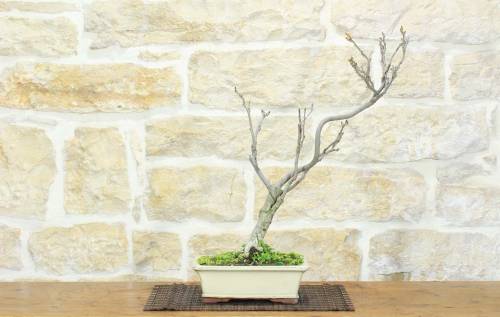
Japanese wisteria bonsai ( Wisteria floribunda ) with white flowers, moyogi style. Plant height h.60cm , nebari 5cm, age approximately 16 years. Round turquoise glazed pot diam. 32.5cm.


We pack the bonsai in order to guarantee the life of the plant

Discover Our Guarantee Up To 2500 €

Active Every Day From 09:00 - 18:00
Presentation
The Japanese wisteria — Wisteria floribunda — is one of the most poetic species in the bonsai world. When it blooms, with those white clusters falling softly among the still-bare branches, it is hard to remain indifferent. This white-flowered variety is particularly sought after for the discreet elegance of its bloom, which arrives every spring with an almost moving punctuality.
The specimen you see has a sinuous trunk, with a beautiful natural movement formed over the years. The 5 cm nebari provides visual stability to the composition, while the rugged bark tells the story of the time this plant has lived through. At approximately 16 years of age, it is a bonsai in the full height of its expressive maturity.
Technical characteristics
- Botanical species: Wisteria floribunda (White-flowered Japanese Wisteria)
- Bonsai style: Moyogi (informal upright)
- Plant height: 60 cm
- Nebari: 5 cm
- Estimated age: about 16 years
- Pot: round turquoise glazed ceramic, diam. 32.5 × h. 12.5 cm
- Total weight: 9.8 kg
- Exposure: full sun
- Care difficulty: intermediate
How to care for it
Position: Wisteria is an outdoor plant in every respect. It craves full sun, especially in spring, as direct light ensures an abundant bloom. In summer, on the hottest days, a little shade during the central hours can help avoid overstressing the foliage. In winter it resists cold well, but if temperatures drop below -5°C, it is best to protect the pot with non-woven fabric or move it to a cold greenhouse.
Watering: Wisteria is a plant that drinks a lot, especially during flowering and in full vegetation. Water abundantly when the soil begins to dry on the surface — in hot months, this can mean twice a day. Be careful though: water stagnation is an enemy to the roots, so always ensure the drainage works well.
Fertilization: After flowering, fertilize with a slow-release organic fertilizer rich in phosphorus and potassium, which encourages the formation of flower buds for the following year. Avoid excess nitrogen, which stimulates leaf production at the expense of flowers. From September, gradually reduce fertilization until suspending it in winter.
Pruning: Branches should be pruned after flowering, shortening new shoots to 2-3 buds. In summer, runners tend to lengthen rapidly: prune them decisively, leaving only the buds closest to the trunk. Summer pruning is fundamental to maintain the shape and stimulate the following year's bloom. Major structural work is carried out in winter when the plant is in vegetative rest.
Repotting: Repot every 2-3 years, preferably in late winter, just before the vegetative restart. Use a well-draining substrate — a mixture of akadama and pumice in equal parts works very well. During repotting, you can reduce the roots moderately, taking care not to damage the larger ones.
To learn more about the care of this species, consult our complete botanical sheet with all the advice from our experts.
Frequently Asked Questions
Q: When does the white-flowered wisteria bonsai bloom?
A: Flowering occurs in spring, generally between April and May, before the foliage fully develops. The white clusters are pendulous and very fragrant. The duration of the bloom depends on the weather conditions but generally lasts for 2-3 weeks. Sunny exposure and correct autumn fertilization are the key factors for having abundant blooms every year.
Q: Can I keep this bonsai indoors?
A: No, wisteria is an outdoor species that needs the natural cycle of the seasons to stay healthy and bloom. It needs winter cold to enter dormancy and then wake up in spring with its flowering. Keeping it in an apartment would compromise both the plant's health and flower production. Place it on a balcony, terrace, or in the garden, in full sun.
Q: How do I get more flowers every year?
A: The secret lies in summer pruning and correct fertilization. After flowering, shorten new shoots to a few buds. In summer, prune vigorous runners leaving 2-3 nodes. Fertilize with phosphorus and potassium-rich fertilizers from late spring to early autumn, avoiding nitrogen excess. Direct sun exposure is also crucial: the more light it receives, the more flower buds will form.
Q: Is the plant I will receive identical to the one in the photo?
A: Yes, this is a unique piece and the photo depicts the exact specimen that will be shipped. However, being a living plant, at the time of delivery it might show differences in vegetation compared to the image due to maintenance work like pruning and pinching, or natural seasonal changes. The trunk structure and general setting remain unchanged.
What is included
- White-flowered Japanese Wisteria (Wisteria floribunda) Bonsai in a round turquoise glazed pot — exact specimen from the photo
- Plant certificate (specimen ID card with species, measurements, and characteristics)
- Reinforced packaging designed to protect the plant during shipping
- Days of preparation
- 3
- tipo pianta
- DECIDUA
FROM FLOWER
| EXPRESS COURIER | EU-ZONE |
| 0 a 100 Kg. | from 0.35 until 5 € for Kg + Additional fix cost (depending to your EU-ZONE) |
| 100 Kg > + | CONTACT US FOR PRICE |
- Add to cart the product.
- Go to Cart
- In the bottom of page "Estimate shipping" and put your country, then the website will give you a

feedback Report comment