€390.00

Home
Trending
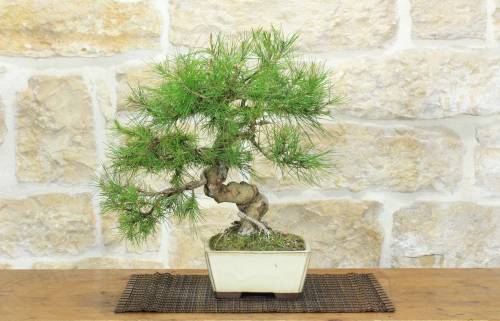

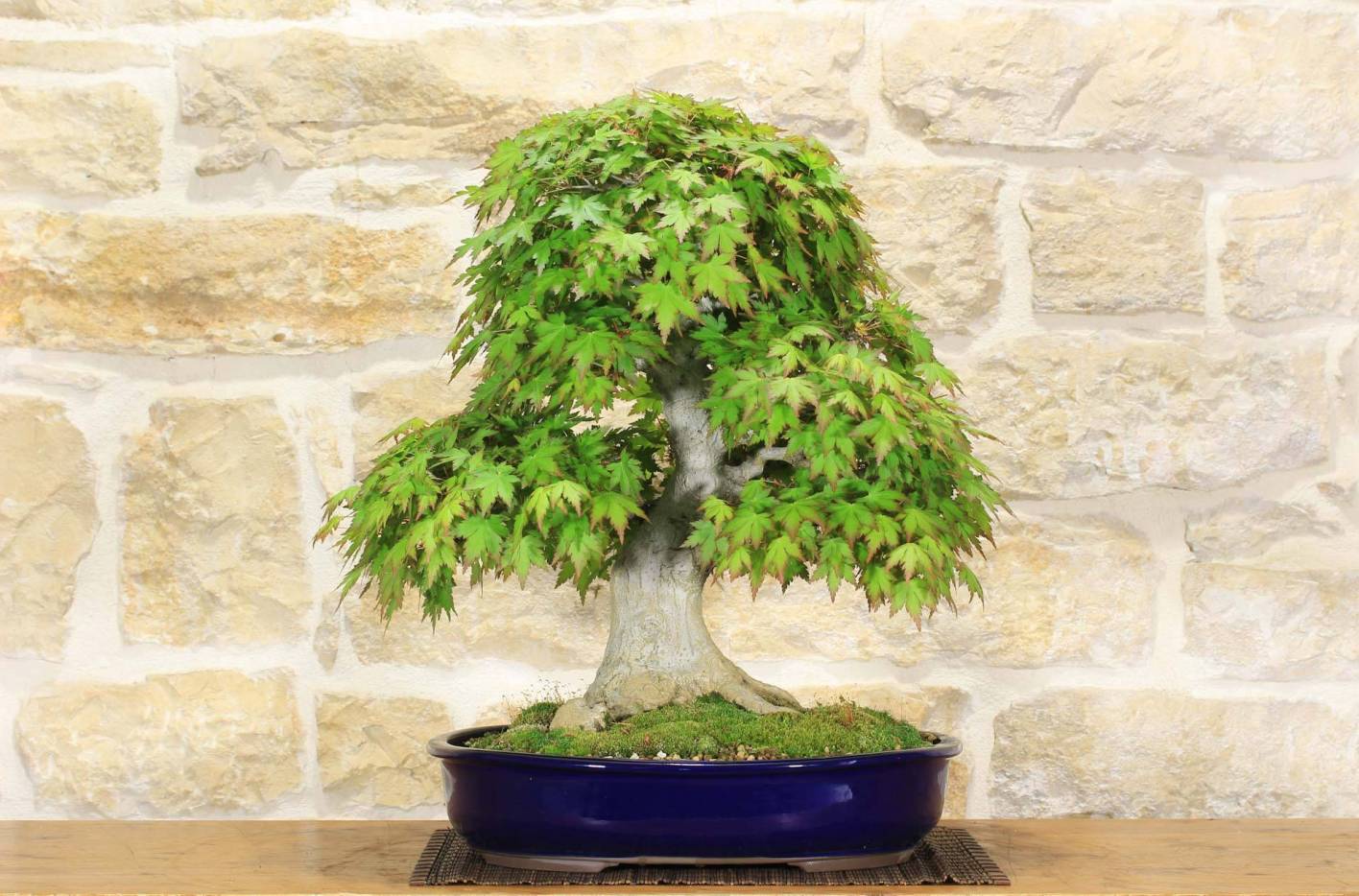
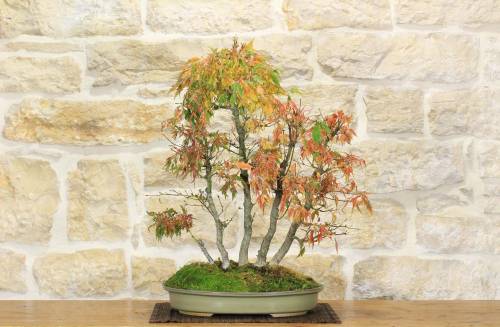
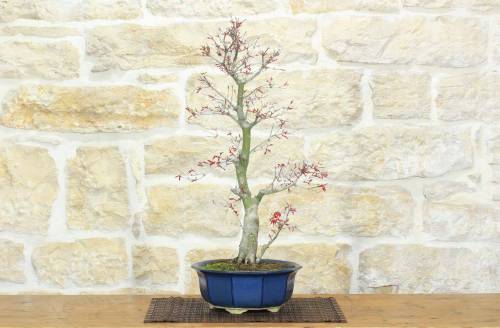
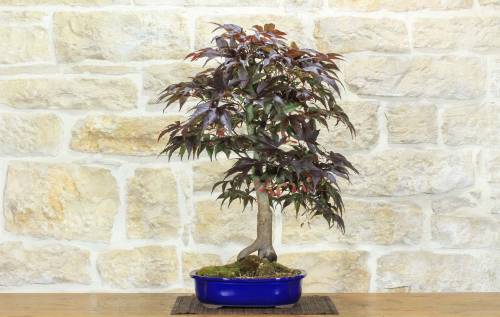
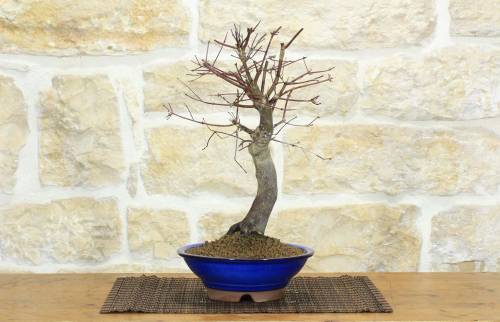
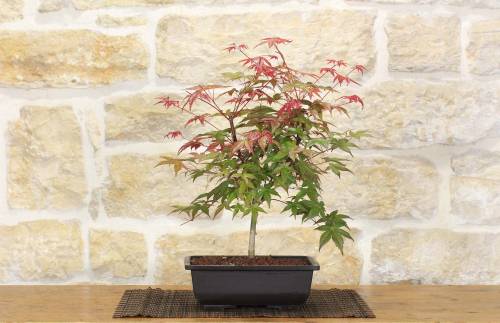
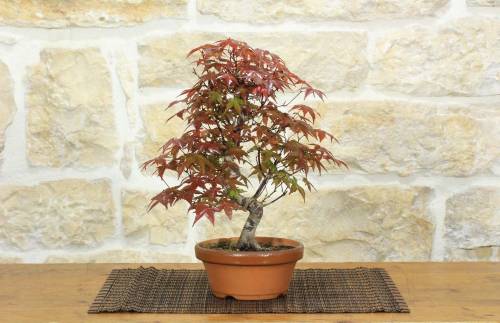
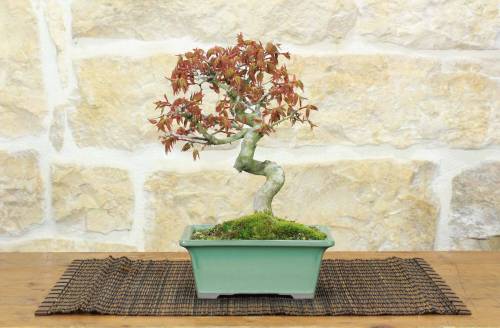
The Japanese Maple (Acer palmatum) is probably the very image of bonsai in the collective imagination. It is loved for its refined elegance, for its delicate five- or seven-lobed leaves and, above all, for its remarkable ability to mark the passing of the seasons: colourful shoots in spring, fresh green in summer, a blaze of reds and oranges in autumn and bare, fine ramification in winter. It is a plant that calls for sensitivity: it is not as tough as an elm, but with the right attention it gives unmatched satisfaction.
Native to Japan, Korea and China, the Japanese Maple includes hundreds of cultivars selected over the centuries (such as the famous blood-red Deshojo, the dwarf Kiyohime or the rough-barked Arakawa). In bonsai it is valued for its ability to build light foliage pads and for the beauty of its bark, which must stay clean and undamaged. It is a deciduous tree that suffers in climatic extremes.
This is the crucial point. The maple has thin leaves that dehydrate easily.
Spring and autumn: full sun, to encourage bright colours and short internodes.
Summer: absolute protection. From June to September, during the middle of the day and in the afternoon, it must be kept in the shade or under shade netting (40-50%). Dry wind is its worst enemy: it scorches the leaf tips within a few hours (leaf burn).
The soil must always stay slightly moist, never soaking but never bone dry either. In summer the maple drinks a great deal because of its large leaf surface. Check the soil mix every day: if the surface is dry, water it. Misting the foliage in the evening (never in full sun!) helps maintain the ambient humidity it loves.
The Japanese Maple is slightly acid-loving and hates limescale. Hard tap water will, in the long run, block iron uptake, leading to yellow leaves with green veins (iron chlorosis) and scorched tips.
Rainwater, or water left to stand, is ideal. If you use tap water, apply chelated iron from time to time.
The maple's fine roots need oxygen and a slightly acid pH.
Repotting is done every 1-2 years on young specimens and every 3-4 years on mature ones, strictly at the end of winter (February-March), just as the buds swell but before the leaves open.
The maple produces a great many roots: during repotting they must be teased out carefully, removing the thick woody ones and shortening the fine feeder roots to keep the root mass compact and flat.
Be careful with nitrogen. If you push too hard you will get huge leaves and long internodes, ruining the aesthetics.
Use a balanced organic fertilizer in spring. In autumn, switch to a "zero nitrogen" or low nitrogen (PK) fertilizer to harden the wood and encourage red leaf colour. Stop feeding completely in July and August.
It produces small reddish flowers followed by the typical paired "samaras" (winged seeds). Although attractive, in bonsai they are often removed straight away so as not to drain the tree's energy, unless you want to collect seed.
Major cuts are made in winter when the tree is bare. The maple has a strong sap flow and heals slowly, forming large callus. Using cut paste on the wounds is essential, otherwise the branch dies back and the wound can become infected. Use the knob cutter to hollow the cut slightly so the bark can close over it perfectly in time.
During the growing season, to keep the shape, trim back the extending shoots leaving 1 or 2 pairs of leaves.
Pinching the central shoot as soon as it opens is essential to prevent the internodes from becoming too long.
The maple's bark is thin and delicate, like human skin. Wire can be applied, but it must be checked almost weekly in spring because it marks the branch in no time. Many experienced bonsai growers prefer to shape the maple by pruning alone (the "clip and grow" technique) or with guy wires, to avoid wire scars.
It is a sensitive plant.
It stands cold well, but the roots in the pot suffer from prolonged frost. If the temperature stays below -3°/-4°C for several days, protect the pot with horticultural fleece or move it into a cold greenhouse. Watch out for late April frosts, which can scorch the newly opened leaves.
Why do the leaf tips dry out in summer?
It is the classic leaf burn. It happens when there is too much wind, too much direct sun during the hottest hours, or if the soil runs out of water even for just a few hours. The maple does not tolerate dry air: shelter it from the wind.
Why has my red maple turned green?
Many red varieties (such as the Deshojo) are red only in spring. In summer they turn green/bronze in order to photosynthesise, then go red again in autumn. If it stays green all the time, it may be a non-red variety or it may be getting too little sun (sunlight "activates" the colour).
When can I defoliate the maple?
Total defoliation is done in June, but it is a stressful technique. Only do it if the tree is in perfect health and well fed, and if you want to reduce leaf size. Never do it in the year of repotting.
What should I do if I see a white film on the leaves?
It is powdery mildew. Treat it immediately with a specific sulphur-based product or an anti-mildew fungicide and move the tree to a better ventilated (but not windy) spot with morning sun.
There are 14 products.